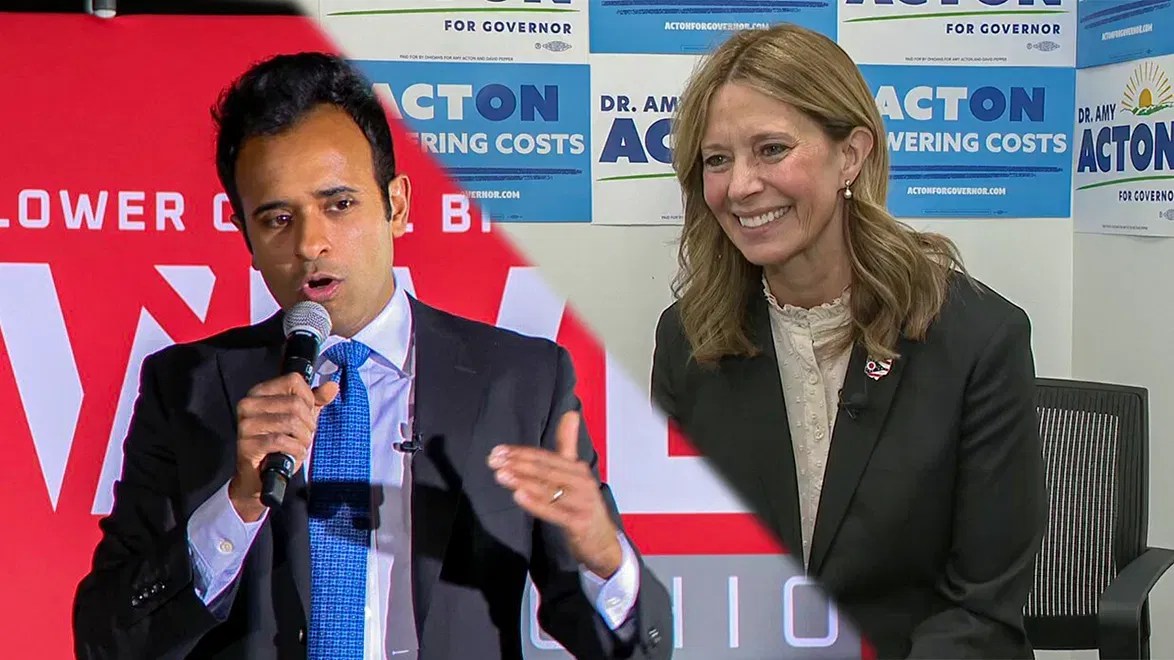
With just days left before Election Day, the Ohio gubernatorial race has violently shifted from a Republican-leaning lock to a deadlocked toss-up. The catalyst for this sudden collapse was a high-stakes gambling maneuver by Vivek Ramaswamy: a $4 million statewide ad blitz featuring Donna Arthur, the estranged mother of his Democratic opponent, Dr. Amy Acton. In the commercial, Arthur calls her daughter a “liar.”
The commercial omitted a devastating piece of public record: Acton and her brother were legally removed from Arthur’s custody nearly fifty years ago after Acton’s stepfather was indicted for raping a 12-year-old Acton.
As the public reacted with widespread disgust, the Ramaswamy campaign did something that defied traditional political logic. They didn’t apologize, pull the ad, or pivot. They doubled down. To the casual political observer, this looks like a display of absolute, unyielding political ruthlessness. I suspect the truth is the opposite of what it seems. Ramaswamy didn’t execute a masterstroke of cold-blooded strategy. He fell victim to a fatal, rigid psychological flaw: he is an inflexible emotionalist.
Let me be clear. I’m a psychologist, but I’m not diagnosing Ramaswamy with anything. Even shrinks get to have personal opinions. But as a general observer of human behavior in my civilian life, I frequently observe brilliant, highly articulate individuals who become trapped in their toxic behavioral loops. Ramaswamy has built his entire public identity on the high of the “dismantling”—the public humiliation and rhetorical destruction of his enemies. This aggressive, dopamine-driven feedback loop worked for Ramaswamy in the high-tech business world and within the insular echo chamber of the 2024 Republican presidential primaries, convincing him that it was a universal law of nature.
The fatal defect in this profile is a complete vacuum of cognitive empathy—the intellectual capacity to predict how other people will feel. Ramaswamy views politics as a game of pure, clinical rhetoric, assuming an audience would focus strictly on the word “liar.” His ego left him psychologically blind to a fundamental human instinct: when normal, everyday independent and moderate voters see a survivor of childhood trauma publicly tormented by her court-documented abuser, their primal instinct is not to cheer the bully. It is to protect the victim.
This psychological blind spot is precisely what the ancient Eastern masters warned against. The best example of this phenomenon can be found in the writings of Sun Tzu, a Chinese general and philosopher (771–256 BC) who was active during the Warring States period of Chinese history.
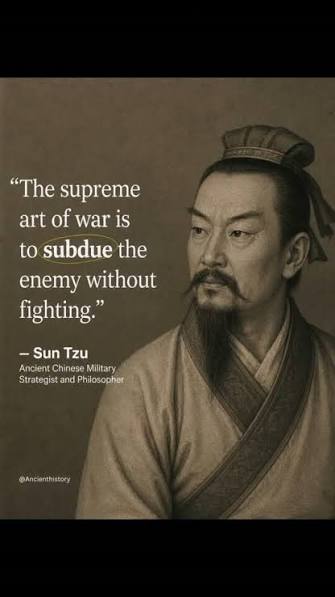
Tradition credits Sun Tzu as the author of The Art of War, perhaps the greatest book on strategy in history. In the preface to his translation of The Art of War, Thomas Cleary noted a profound paradox: we often mistake the man of aggressive violence for a ruthless strategist, but he is just self-indulgent. “Lao-tzu and Chuang-tzu show that the man of aggressive violence appears to be ruthless but is really an emotionalist; then they slay the emotionalist with real ruthlessness before revealing the spontaneous nature of free humanity.” Cleary goes on to state, “The ancient Taoist masters show how real ruthlessness, the coldness of complete objectivity, always includes oneself in its cutting assessment of the real situation.” This man isn’t Ramaswamy; his actions are dictated by a hot-headed, ego-centric impulse to inflict pain and achieve personal validation through domination.
Real strategic ruthlessness, Sun Tzu taught, is entirely detached from ego. It requires the “coldness of complete objectivity”—an objectivity that always includes oneself in its cutting assessment of the real situation. Had Ramaswamy possessed true, cold objectivity, his inward assessment would have been merciless: I am a wealthy, aggressive political newcomer who desperately needs suburban moderates to win. If I weaponize the abuser of a childhood trauma survivor against my opponent, I will look like a villain, and the public’s protective instincts will crush me. But his emotional need to dominate blocked that self-assessment entirely.
If Sun Tzu is too ancient a framework, Ramaswamy would have done well to study an American cultural archetype of strategic mastery: Don Vito Corleone.
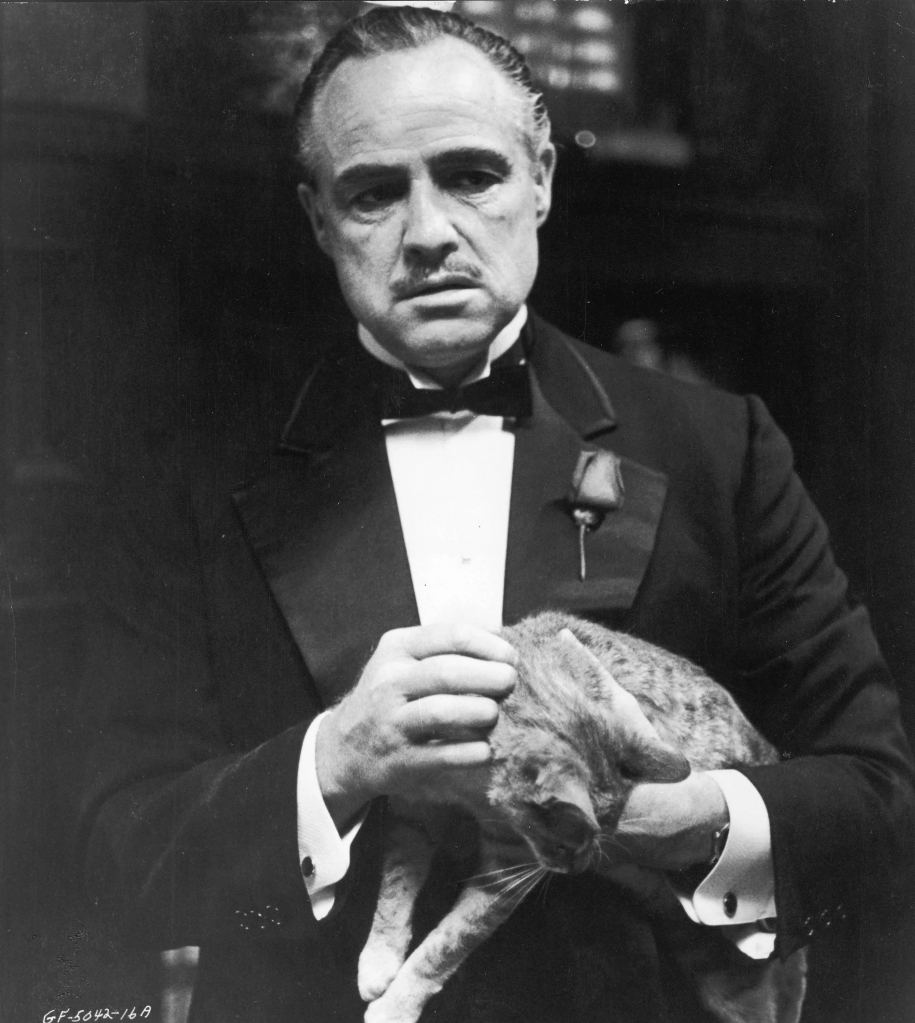
In the Corleone universe, letting your ego or a desire to humiliate dictate your actions is treated as a life-threatening liability—a lesson Sonny Corleone learned at the cost of his life. Don Corleone suppressed his grief and rage to negotiate a peace treaty because he objectively calculated that continuing a hot-headed war would destroy his family.
With a little help from AI, I invited the Don over for a glass of wine to discuss the matter:
“What do you make of Ramaswamy bringing Acton’s estranged mother into an attack ad?” I asked.
The Don set down his glass.
“In my world, we have rules. You fight a man, you fight a man. You do not drag his mother, his wife, his children into the street to do your fighting for you.”
“Politics doesn’t seem to have that rule.”
“Then let us talk about judgment. He brings out this woman’s mother. What does he expect to happen?”
“He wants voters to think Acton lied about her childhood.”
“And instead, they hear about the childhood.”
“Yes.”
He spread his hands.
“Already, he has a problem.”
“Some people would say he was just being ruthless.”
“Ruthless.” He considered the word. “People say this when they wish to make poor judgment sound impressive. Tell me—did he make her look unfit to govern? Or did he give people a reason to question him?”
“That seems to be what happened, at least among the people condemning the ad. Even some on his own side objected.”
“Of course. Now they must answer for him. They came to support a candidate. Instead, they are asked to explain why they stand beside a man who would do this.”
“So he’s damaged his relationships.”
“He has made those relationships more expensive.”
I took a sip of wine.
“He must have thought the mother would be a powerful witness.”
“A mother speaking against her own daughter? Yes. I can see why he thought that.” The Don paused. “But an estranged mother—you must first understand the estrangement.”
“Acton’s account is that her mother was part of the childhood she needed to escape.”
“Then he should have anticipated her answer. And her brother’s answer. Did he think the mother would speak, and everyone else would remain silent?”
“Perhaps he thought the accusation alone would do the damage.”
“Perhaps it will, with some people. We should not pretend otherwise.” He leaned back. “But you asked for my judgment. He has chosen a witness whose credibility brings the whole family history into question. Now he must defend not only what she says, but his decision to use her.”
“In my experience, people respond to unexpected challenges in their habitual ways. His seems to be attacking whoever stands in his way.”
“And when the attack creates another problem?”
“He attacks again.”
The Don nodded slowly.
“Then his opponents know something useful about him.”
“That he’s aggressive?”
“That he is predictable.”
“Emerson called a foolish consistency the hobgoblin of little minds.”
“I would not know about Emerson. But if I know what a man will do when he is frustrated, I know something he should have kept from me.”
“So the problem isn’t simply that the ad was cruel.”
“No. You may condemn the cruelty. You should. But he wishes to be governor, so ask another question: can he set aside his favorite tactic when the situation requires something else?”
“And if he can’t?”
“Then he is not choosing anymore. He is reacting.”
For a moment, neither of us spoke.
“Has he lost?” I asked.
“The election? We do not know.” He lifted his glass. “But he has given people a reason to doubt his judgment. And he paid to bring it to their attention.”
I thanked the Don for his insight. He smiled and said, “Someday—and that day may never come—I’ll call upon you to do a service for me.”
So there you have it. Ramaswamy operated loudly, performatively, and with a hyper-visible desire to hurt his rival. He let everyone outside the “family” know exactly what he was thinking, allowing his opponents to effortlessly brace for the impact and use his momentum to flip him onto his back.
In my experience, people tend to respond to unexpected challenges in their habitual ways. Ramaswamy is no exception. His answer is to diminish the person standing in his way; when that fails, he doubles down. “A foolish consistency,” as Emerson put it, “is the hobgoblin of little minds.”
Currently, the prediction markets and the unadjusted polling data are delivering a cold, objective verdict. By mistaking emotional cruelty for strategic ruthlessness, Vivek Ramaswamy didn’t attack his opponent. He broke the ultimate rule of conflict: he defeated himself.
Discover more from Samurai Shrink (formally Wandering Shrink)
Subscribe to get the latest posts sent to your email.

