
Sometimes it’s a shock to realize that I have been working as a psychologist in the legal system for over 35 years. I’ve been a psychologist for longer than that but that was as a school psychologist and psychotherapist. I’m not a lawyer, but I do work closely with them, and you can’t spend decades in the courtroom without developing a certain amount of pattern recognition. Today my pattern recognition kicked in hard.
Before I go further, a brief content warning:
Content warning: This piece contains legal theory, guided speculation, and personal opinions about public figures who chose the spotlight and now must endure the commentary. It is offered for discussion, not as legal advice, medical advice, or spiritual guidance, and certainly not as a balanced news report. Readers seeking strict neutrality are invited to consult a weather forecast instead.
Acting Attorney General Todd Blanche said Sunday that the indictment of former FBI Director James Comey goes beyond the Instagram post of seashells on a beach spelling out “86 47,” central to his case. “This is not just about a single Instagram post,” Blanche told NBC News’ “Meet the Press” on Sunday. “This is about a body of evidence that [prosecutors] collected over the series of about 11 months. That evidence was presented to the grand jury.”
Blanche said he was not “permitted” to share the other evidence against Comey that was collected but added, “At the trial—a public trial that will be open to the public—everybody in this country will know exactly what evidence the government has against Mr. Comey.”
Comey was indicted last week on charges alleging he threatened the life of the president after he posted a photo on Instagram of seashells forming the numbers “86 47.”
When asked Wednesday whether he actually felt that his life was threatened by Comey’s post, President Donald Trump said, “Probably.”
“Well, if anybody knows anything about crime, they know 86 — you know what 86 — it’s a mob term for kill him,” Trump added.
Restaurant workers told NBC News the term is “everyday lingo,” noting it has nothing to do with death or murder. As someone who has worked in restaurants, I can tell you that while I heard the expression on many occasions, I never heard it used as code for murder. Not once.
Oh, where to start? Sometimes my contempt for the apparatchiks of this administration is beyond my literary ability to express. I get that people have different political views than I do, and I’m not always right. There need to be both conservative and progressive forces in any functioning society. What I cannot tolerate is the daily mendacity, gaslighting, and hypocrisy that gets served up by the MAGA crowd. Todd Blanche not only excels at this, he seems to have turned it into a professional career.
So I asked Perplexity AI to assist me in expressing my utter disgust. I named the themes: mendacity, being a lickspittle, toady, opportunist, and moral coward. I also suggested that the likes of Shakespeare, Samuel Johnson, and Oscar Wilde could probably do the job better than I could. Here’s what I got back.
“Todd Blanche is a craven little lickspittle, an infinite and effortless liar, an hourly promise‑breaker and ambulance‑chasing courtier whose only consistent principle is prostration before power.”
and:
“Todd Blanche is a starveling soul wrapped in a lawyer’s gown: a most notable coward, a tireless retailer of borrowed lies, a court‑bred parasite who dines on the scraps of stronger men’s corruption and calls it ‘public service.’”
I’d be a while backing up from those, but they’re no more than he deserves. Let me explain where I’m coming from.
A little background. In a regular criminal trial, the jury hears from both the prosecution and the defense and must decide whether the defendant is guilty beyond a reasonable doubt. In a grand jury, things work differently. You meet in private; you hear only the evidence and witnesses that the prosecutor brings you, and your job is simply to decide whether there is enough evidence—called ‘probable cause’—to charge someone with a crime so the case can go forward to trial.
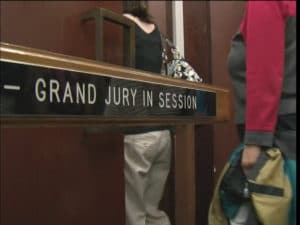
Over time that supposed citizen safeguard has withered into something much closer to a ritualized rubber stamp for prosecutors: in recent years, federal grand juries have agreed to indict in roughly 99.99‑plus percent of the cases put in front of them. In that world, a decision not to indict isn’t just unusual, it’s a statistical freak occurrence—which is why a cluster of “no true bills” in the Trump era tells you something has gone very wrong with the cases being sold to those jurors. The Comey case is no different.
Prosecutors love to hint that a grand jury has seen “lots more evidence we can’t talk about,” as if behind the curtain lies some devastating hidden truth. In practice, that often means they’ve fed jurors a slanted mini‑lecture and a friendly agent’s solemn agreement, not some trove of secret, exonerated‑by‑secrecy documents.
In the Comey case, I would wager that the supposedly “additional” evidence came in two flavors: a dubious linguistic fairy tale about the word “86,” and pages of character testimony about how much James Comey dislikes Donald Trump—something already visible from low Earth orbit.
Here is how I think it went. The prosecutors told the grand jurors that in “gangster slang,” to “86” someone can mean “murder.” Then they brought in a veteran law enforcement agent, preferably an FBI agent, to explain the supposed sinister meaning of “86.” It probably went something like this:
“Special Agent Squarejaw, how long have you been an FBI agent?”
“Over thirty years, sir.”
“And during your career, have you been involved in the investigation of organized crime?”
“Yes, sir. I was involved in investigations of the Pasta Fazool and Rigatoni crime families.”
“Those are traditional Italian‑American organized crime groups?”
“Yes, sir.”
“That must be dangerous work. I commend you for your service, Agent Squarejaw.”
(Smiling modestly) “It’s my job, sir.”
“Over the years, have you become familiar with the special jargon and argot used by people in those organizations?”
“Yes, sir. You have to learn the slang and the code words they use if you want to understand what they’re really talking about.”
“When you say ‘slang and code words,’ you mean language that sounds harmless to outsiders but carries a different meaning for insiders?”
“Yes, sir. They’ll use everyday expressions so that, on the surface, it sounds like nothing is going on.”
“And some of those expressions can sound like ordinary restaurant talk, can’t they?”
“Yes, sir. A lot of it borrows from food, menus, and customers—things that sound completely innocent in a restaurant setting.”
“I want to ask you about one phrase in particular that came up in this case: ‘86 47.’ In a normal restaurant, what does ‘86’ usually mean?”
“In the restaurant world, ‘to 86’ something usually means to take a menu item off because it’s not available anymore, or to get rid of an unruly customer—to throw them out or refuse service.”
“So to an ordinary person who hears ‘86 47,’ it might just sound like a bit of restaurant slang glued to a number?”
“Yes, sir. Without context, it can sound like inside talk from a diner or bar — something you’d hear shouted across a kitchen.”
“But in your work, are you aware that ‘86’ can sometimes be used in a more sinister way?”
“Yes, sir. In some circles it’s treated as slang for getting rid of a person, not just a menu item.”
“And in this case, what does the ‘47’ refer to?”
“In the political context we examined, ‘47’ is commonly used as shorthand for President Trump, who is widely referred to as the forty‑seventh president.”
“So, putting that together, when someone familiar with both restaurant slang and criminal slang sees ‘86 47’ used in a political post about President Trump, how might they understand it?”
“They could understand it as code for getting rid of, or doing harm to, the person referred to as ‘47’ — that is, President Trump — rather than just dropping a menu item.”
“When you say ‘doing harm,’ what do you mean in plain English?”
“In plain English, it can be understood as calling for the president to be killed, sir.”
“So, to summarize: to someone who doesn’t know any of this, ‘86 47’ can sound like corny restaurant chatter. But to someone who knows the slang you’ve described, it can be read as a serious call for violence against the president?”
“Yes, sir. That’s correct.”
Everything Agent Squarejaw says here is technically accurate up to a point. “86” really is restaurant slang for getting rid of something or refusing service, and “47” really is widely used shorthand for Trump. The manipulation lies in what jurors aren’t told. There is no documented history of “86 47” functioning as a recognized threat phrase in any real community—not in organized-crime cases, not in film or TV scripts, not in lyrics, and not in law-enforcement manuals. The government took two bits of loose slang, bolted them together into a brand‑new, politically useful construction, and then used an authoritative‑sounding agent to sell that freshly minted interpretation to jurors as if it had a long, sinister pedigree.
You can see how this works with a simpler example. Imagine I announce that “Joe Doke should probably skip dessert tonight” is secret mob code for “kill Joe Doke.” There is no history of anyone using that phrase that way; I’ve just decided that’s what it “really” means. If a famous podcaster repeats my story the next day, that doesn’t transform the sentence into established underworld slang. It just means the same made‑up translation is now echoing in a bigger room. Treating “86 47” as an old, settled threat phrase works exactly the same way: the meaning comes from the accusation and the repetition, not from any genuine preexisting code.
That’s why I have so little patience for Blanche’s hints about “other evidence” the grand jury saw. When the alleged threat is a public Instagram post everyone can read for themselves, the “secret” component is almost certainly not some hidden second threat, but rather the way prosecutors sold the one we already know about: a tendentious little seminar on how “86” is supposedly mob slang for “kill him,” delivered with great solemnity by a career agent, plus a thick packet proving—stop me if you’ve heard this before—that James Comey really, really dislikes Donald Trump.
And what does the evidence actually shows about “86”?
Short answer: Nobody can find a solid, organic pop culture example where “86” is clearly used to mean “kill” or “execute” in the way the DOJ and Trump are now claiming. What does exist are (1) dictionary entries that list that meaning with no real‑world citations and (2) people insisting, post‑Comey, that “mob movies” use it that way—without being able to produce an actual line.
Merriam‑Webster and other mainstream references define “86” as “to throw out,” “to get rid of,” or “to refuse service to,” tracing it back to 1930s soda‑jerk and restaurant slang. Wikipedia, drawing on Cassell’s Dictionary of Slang, notes that “to 86” can also mean “to kill, to murder; to execute judicially,” but that is a lexicographer’s secondary sense, not backed there by real usage examples. Coverage of the Comey case quotes Merriam‑Webster staff to the effect that while you can find some newer, anecdotal uses that stretch “86” toward “kill,” the dictionary doesn’t even include that sense because it’s too marginal and weakly attested. In other words, the “kill” meaning exists mostly as a speculative secondary gloss in a couple of slang dictionaries and urban‑legend explanations, not as a widely documented, ordinary usage.
Trump now tells crowds that “‘86’ is a mob term for ‘kill him’… you ever see the movies? ‘86 him’… that means kill ’em.” It’s a nice line; it just doesn’t survive contact with the actual record. When reporters went looking, a search of scripts from classic gangster films turned up no instance of “86” being used that way, despite Trump pointing specifically to mob movies as his source. The Mob Museum in Las Vegas told journalists they are not aware of any canonical mob‑film usage and treat the “86 = 8 miles out, 6 feet under” story as urban legend, not documented underworld code. Online, you see the same pattern: people saying “I know I’ve heard ‘86 him’ in a movie,” followed by long silences when anyone asks for an actual line, scene, or script citation. So far, nobody has been able to cough up a single clean, pre-existing movie or lyric quote of the “Let’s 86 him” variety where the context makes “kill” the only reasonable reading.
When you strip away the bluster, the “86 = kill” story has nothing solid holding it up. The ordinary, documented meaning of “86” in American English is restaurant and bar slang—“we’re out,” “throw him out,” “get rid of it”—and the supposed “kill” sense lives mostly in a few speculative dictionary entries and after‑the‑fact folklore. When you go to the people whose job it is to track meaning, the floor falls out from under the “mob code” narrative; to turn Comey’s “86 47” beach post into a death threat, Blanche has to lean on a meaning the language itself stubbornly refuses to supply.
All of this matters because Blanche’s “mountain of evidence” turns out, on inspection, to be mostly a pile of sand. There is the beach photo we can all see; a contrived gloss on a piece of restaurant slang that doesn’t bear the weight they put on it; and a stack of material proving that James Comey despises Donald Trump, a fact nobody has ever seriously disputed. What is thin as law looks thick as politics, which is precisely why you dress it up with solemn testimony, secret grand jury proceedings, and talk about hidden evidence the public isn’t allowed to know about yet. I’ve been watching this kind of thing from the witness chair for a long time, and the pattern here feels depressingly familiar.
What I see in the Comey case is not a careful defense of the presidency but a familiar abuse of power: stretching language, procedure, and criminal statutes until ordinary political contempt can be dressed up as a threat to the throne.
Discover more from Samurai Shrink (formally Wandering Shrink)
Subscribe to get the latest posts sent to your email.

