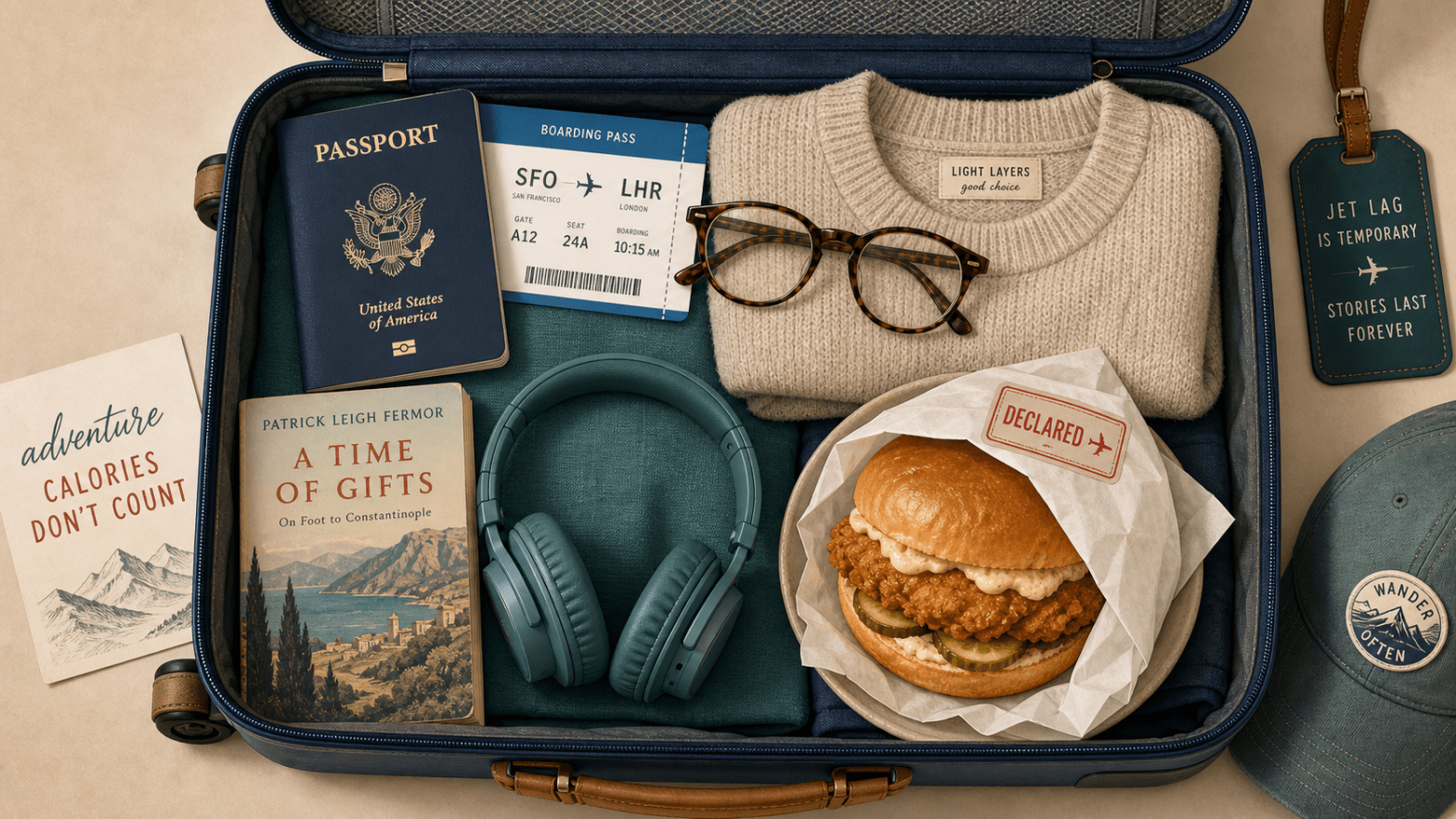
On Thursday, after a 2-week trip to Ireland, my wife and I flew back to Boston on Aer Lingus. It’s a pretty easy trip by international flight standards, only about 6 hours in the air. We dropped our big bags and headed for Dublin Airport security screening. You know the drill: frantically empty your pockets; throw the contents into the bin along with your carry-on and personal item; go through the metal detector or x-ray machine; and head for the next stop on the security theater express. But before you get there, you work your way through the duty-free zone. I almost never buy anything at duty-free shops. Usually, you can get a decent discount on high-ticket items I would never buy anyway, and the discounts on things I might actually want, like a bottle of plain old Jameson whiskey, are not enough to justify the bother.
But they do have food kiosks right next to the bars where nervous fliers are getting liquored up. I bought some Irish candy for the kids across the street. Kay and I also got a couple sandwiches for the road. You never know what the airline will be serving or how long you might sit on the tarmac. I got a chicken wrap and my spouse went for something vegetarian. I also picked up a package of biltong, which, as far as I can tell, is just beef jerky with another name.
Then I encountered something new. For some reason, US customs processes your arrival in Dublin rather than when you land in the US. Fine with me, I might need to grab my bag in Boston and run for the bus to Portsmouth. You go to pre-clearance, which is the first checkpoint where they check your boarding pass and documents—so far so good. The next stop is US Customs and Border Protection, where you hopefully get through immigration, customs, and agricultural inspection. It was here we hit a minor snag.
“What is the purpose of your travel?”
“On vacation, headed home, ma’am.”
“Where do you live in the US?”
“Portsmouth, New Hampshire.”
“Are you traveling with anyone else?”
“Just my wife, this young woman right here. You know, she’s small, but mean as hell.”
(Ok, a bit of artistic license there.)
“Anything to declare? Large amounts of cash, restricted items, or goods?”
“Nothing, nada, bubkis.” (Sidebar: There is an apocryphal story that when Oscar Wilde came through American customs and was asked what he had to declare, he replied, “Only my genius.” The story appears to be untrue. However, when asked about his trip, he did say that he was “disappointed by the Atlantic Ocean.”)
And then…
“Are you carrying any food, plants, or animal products?”
Uh oh. “Just these sandwiches and this bag of biltong.”
Then the sirens went off. The sound and flashing lights were blinding. I was thrown to the ground and drummed my heels on the floor as I was tazed repeatedly. The last thought I had as consciousness fled was, “All I wanted was a chicken wrap and now I have to die for it?”
Ok. None of that last part happened, sorry. I replied that I had the sandwiches and biltong. The agent told me to pitch them. Okay, you win some, you lose some. But then she looked thoughtful. After considering a moment, she told me that if I took temporary custody of Kay’s sandwich and took it through the American citizen’s line, I could keep it. The reasoning didn’t make a great deal of sense to me, but at least we had a sandwich.
We eventually boarded the Airbus and set off for Boston. I had 6 hours to kill. Once we reached cruising altitude, we were served our meal. In my case, it was chicken breast with some kind of cheese sauce and risotto, followed by some kind of pudding along with my choice of coffee or tea, with plastic packets of milk. Then I settled back and watched some movies.
You know how my mind works, gentle reader. What an inquisitive fellow I am. A multitude of thoughts and questions raced through my mind about my sandwich encounter at US customs. For example:
–It’s clear they don’t want you to bring guns, knives, or booze on the plane, and I’m in complete agreement. But they don’t just ask; they put you through metal detectors, X-ray you, ogle your naked carcass, and sometimes take you off to the side to pat you down. If they were really concerned about your chicken wrap, they wouldn’t just ask; they would check. All you’d really need would be a cuisine-sniffing dog. And they have plenty of these well-trained canines. The USDA has actual beagle brigades. About 150 beagles nationwide work at major international airports around the US, and they are pretty darn effective. They have been at it since 1984, and since they started, they have interdicted over 75,000 busts for things like giant African snails, whole roasted pig heads, undeclared meats, and fresh produce.
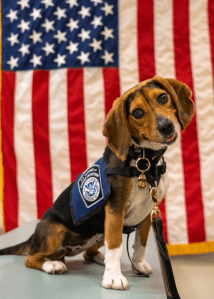
If my Dublin Airport chicken wrap truly threatened American agriculture, wouldn’t they use trained sniffer dogs instead of hoping I’d voluntarily confess? It’s biosecurity theater—all performance, minimal substance.
–When you get past US Customs and Border Protection, they still have food for sale in the area near the gates. Where does this food come from? Do they fly it in from Boston?
Here’s your answer. The shops and cafes in Dublin Airport—both before and after US preclearance—are typically operated by the same Irish retail companies (like Spar, Costa, WHSmith, and other similar companies). They source their products from the same Irish distributors. The USDA regulations for post-preclearance food sales don’t require them to import food from America or use different suppliers—they just require vendors to follow an approved product list and procedures.
–Where does the food on the plane come from? Apparently, nobody is going to stop me in Boston and check for illicit ham, eggs, or cheese. It turns out that the food on my Dublin-to-Boston flight came from Dublin Airport catering facilities using locally sourced Irish ingredients.
So the full picture is
- My chicken wrap (Irish chicken, bought at Dublin Airport): CONFISCATED as biosecurity threat
- Airline meal (Irish chicken, prepared at Dublin Airport): SERVED TO ME on the flight
But just when I thought it couldn’t get any sillier, we touched down at Logan. Because I cleared US Customs in Dublin, I was treated as a domestic arrival. No agriculture inspection, no customs checkpoint, and no beagle brigade sniffing for contraband. What prevented me from sticking my chicken lunch in a baggie and sashaying into Boston? Not a darn thing. I could have theoretically had Irish food in my carry-on (not recommending, saints preserve us), and nobody would have ever known. And this is the final, devastating proof that the whole system is absurd.
Once I got home and unpacked, I continued to think about the whole situation and the way it played out. This was not a major episode in my life; after all, we are just talking about the loss of a mediocre chicken wrap (I hear you ask, “Then why are you rattling on about it?” to which I reply, “Because shut up”).
But having just come from Ireland, I found myself thinking about Brendan Behan—Dublin-born playwright, ex‑IRA volunteer, world‑class drinker, and owner of one of the great unruly voices in Irish literature. He had a gift for turning everyday run‑ins with authority into stories that were equal parts comedy and indictment.
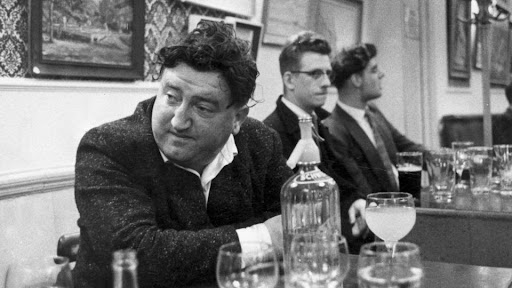
As Behan might have put it:
They stopped me at Dublin Airport over a sandwich.
Not a bomb, not a submachine gun, not even a decent bottle of whiskey—just a bloody chicken wrap I’d have eaten before we were halfway down the runway if they’d left me alone with it.
“Is that food?” says your one in the uniform, looking at it like it was planning a coup.
“Well,” says I, “it’s what passes for food in the airport, God help us.”
Next thing, it’s whipped out of my hand and condemned on the spot like it’s after joining the wrong side in the Civil War. No trial, no jury, straight into the bin. I’ve seen men get more mercy for starting fights in pubs.
A few hours later, I’m on the plane, and what do they bring me only chicken again, laid out on a little tray like it’s going to Confession.
“This one’s grand,” says the universe. “Totally safe. Approved by three governments and an airline catering company.”
So the chicken on the ground is a mortal danger to American agriculture, but the chicken in the sky is a fine, upstanding citizen. It’s the first time I’ve seen poultry get political asylum at thirty thousand feet.
That’s bureaucracy for you: they’ll confiscate the sandwich and serve you the policy that killed it. At least the sandwich might have had some flavor.
In the end, my poor chicken wrap died for national security, but the only thing actually protected was the logic of the system itself.
Couldn’t have put it better myself.
Discover more from Samurai Shrink (formally Wandering Shrink)
Subscribe to get the latest posts sent to your email.


Hahaha
LikeLike