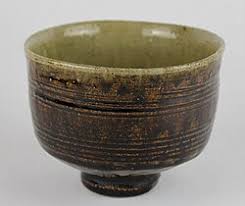
It’s Sunday, and over the last year I’ve developed a routine. I don’t really sleep late anymore, so on Sundays I’m usually up and around by 7 AM. A couple cups of French press half-caf, some net surfing, and maybe throw in a load of laundry. I’m usually at the pottery studio by noon; this gives me a couple hours to work, and I can still catch the end of whatever NFL game is on. Today was no different.
If you work on pottery even semi-seriously, you start to learn that you have to develop a rhythm. Maybe on Saturday, you threw a couple bowls. You have to let them firm up before you can trim them and carve out a foot. Pots have feet, I hear you ask? Look at the bottom of your beer or coffee mug; see that ring that raises it up a bit? Why is it there? A bunch of reasons:
- Mugs and plates can warp when they are fired, and the foot increases stability if there is some minor warping
- If you put a hot, flat mug of coffee on your glass tabletop, all that surface and heat could damage the surface
- If you are glazing a mug, you often dip the whole thing in the liquid glaze. The glaze fuses in the kiln, turning into a kind of molten glass. If you aren’t careful, it will run down the mug like hot fudge off a sundae and fuse to the kiln shelf. When it cools, you’ll have to chisel it off the shelf, ruining both. The foot makes it easier to wipe the glaze off the bottom
- Lastly, it gives your piece a bit of “lift” so it doesn’t squat on the coffee table like a toad.
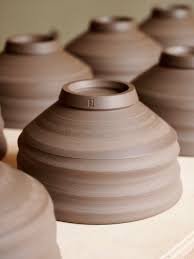
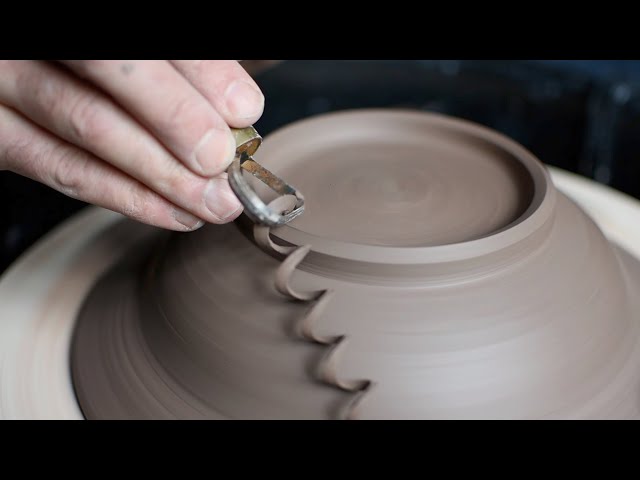
Depending on what I’ve been working on, there might be a few of my pieces that have been bisque fired, which is the first, lower-temperature firing that turns the raw clay into something like flowerpot consistency. This is important, because if you dipped an unfired pot in a bucket of glaze, it would just dissolve. So on any day at the studio, you might have pots that need to be trimmed and footed and a couple that need to be glazed. Timing is everything if you want to be efficient. Usually, I don’t throw new pots if I have trimming and glazing to do.
Today, I decided to throw. I have a new 25-pound bag of clay. I took it over to the table and used a wire tool to cut off about 5 pounds. It takes about 1 pound of clay to make a cup and up to 2 pounds to make a tea bowl. Then you have to wedge the clay. Wedging is like kneading bread but requires more muscle. Wedging the clay makes it easier to work with and also gets rid of any hidden air pockets. Bubbles of air in the clay will throw your pot off center on the wheel, and even if they don’t, the bubbles will expand in the kiln and make your pot into a little bomb, sprinkling your studio-mate’s creations with ceramic shrapnel. Fun fact: Shrapnel is named for a British artillery officer, Henry Shrapnel (1761–1842), who invented a particular kind of anti‑personnel shell in the early 1800s.

It was a hollow iron projectile that was fired from a cannon. It was packed with lead bullets and an explosive charge. When it was in the air, it would explode, showering the enemy troops with lethal projectiles. Eventually, any fragments from a grenade, shell, or bomb became known as shrapnel. A clever idea, but I’m not sure he made the world a better place.
Once you wedge your clay, you form it into balls. You take one and slap it onto the wheel and get it spinning at top speed. Then you center the clay. You wet your hands and the clay, then push down with one hand and in with the heel of your other hand until you have something that looks like a large hockey puck. It’s harder than it looks.
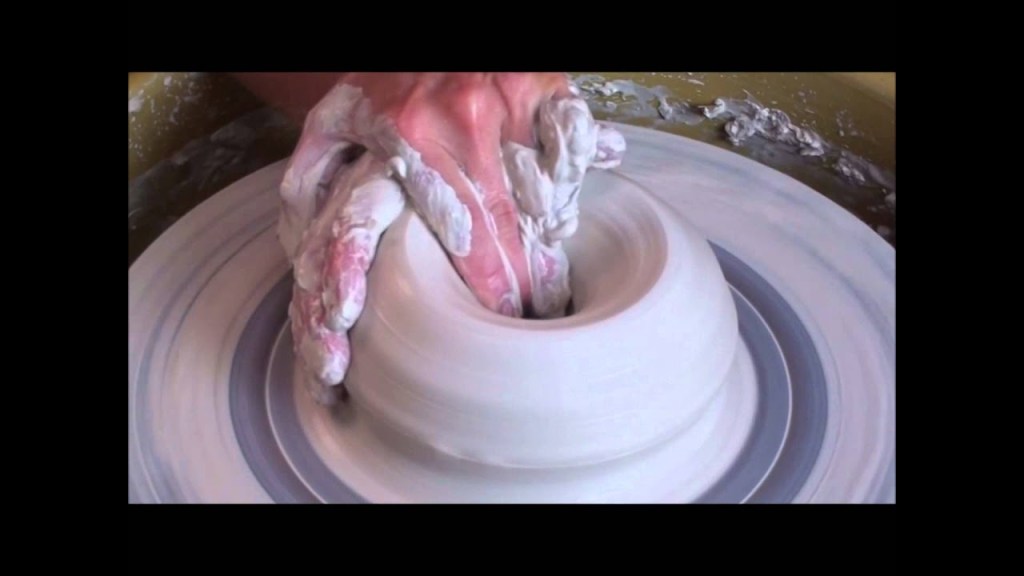
I remember when I was the pottery studio foreman at New College back in 1974; I got pretty good at it. Beginning students would sometimes watch me and make comments like, “Oh, you must be such a centered person.” Really? Even then I used to wonder, “Where do you get these romantic notions?” Most beginners have lots of trouble with this first step. You have to brace your elbows on your hips and lean in, using your weight to get the clay perfectly centered. Until you can do it, you really can’t make anything.
I could go on, but briefly, you make a hole in the center of the hockey puck and open it up until you have a squat, thick cylinder on the wheel. Then you put one hand inside and one on the outside and pull the clay up vertically. It usually takes a number of pulls to get it to where you want it. This is the basis of making cups, mugs, plates, bowls, and teapots.
I had mastered the process in college, but that was 50 years ago. It took me a while to recover that skill, and more than once, my ball of clay would detach itself from the wheel and fly across the studio, much to the amusement of my fellow potters. But it’s been a year since I got back into this. Today I noticed something. I slapped the clay on the wheel, centered it, and pulled it up into a cylinder without any real thought. When did that happen? Well, there’s that old joke: how do you get to Carnegie Hall? Practice, practice, practice.
At some point over the last year, the basics of throwing quietly moved from “things I have to think about” to “things my hands just do.” I’ve started to realize this is the same shift that happens in a lot of other skills: driving, speaking, playing music—and it’s exactly what wabi-sabi pottery (and even psychology) depends on.
When you first learn to throw on the wheel, every motion requires conscious recall—you’re holding a set of instructions in declarative memory, like a checklist you keep consulting. Declarative memory lets you consciously recall facts and events, like remembering that Paris is the capital of France or recalling what you ate for breakfast yesterday. With practice, those steps migrate into procedural memory, the brain’s system for learned skills and habits. Procedural memory underlies skills and habits, like being able to ride a bicycle, type on a keyboard, or play a familiar tune on an instrument without having to think through each individual movement. The routine becomes internalized, running almost automatically, so your attention is free to notice other things—like the curve of the wall, a soft spot, or an interesting wobble. If this sounds mystical, it isn’t; you’ve lived it.
We do it with language all the time, and not just when we think about grammar. Let’s try a quick thought experiment. You open a closet and find a coat you forgot you owned. Here’s what it’s like:
- The coat is blue.
- The coat is wool.
- It’s a big coat.
Now, say out loud what you just found. Go ahead—I’ll wait.
Most people will say something like, “a big blue wool coat.” You probably wouldn’t say “a blue wool big coat,” right? That’s because, in English, we have a natural order for adjectives: size → color → material → noun. There’s even a mnemonic for it—OSASCOMP—which stands for Opinion → Size → Age → Shape → Color → Origin → Material → Purpose → Noun.
So we’d naturally say “a big old round red Italian wooden serving bowl,” not “a wooden red Italian old big serving bowl.” The first seems natural, while the second is awkward. But I’m willing to bet that unless you have made a study of language, you were never taught adjective order in English class, and you don’t even know that you are doing it. It’s like a subroutine in a computer program.
Remember when you learned to drive? At first, nothing about it was automatic: stay in your lane, check the speedometer, remember your turn signal, scan your mirrors, and don’t get too close to the car in front. Now, if you are anything like me, you’ve had the experience of pulling into your driveway and realizing you barely remember how you actually got there. That’s a driving subroutine running in the background.
But my favorite example of this is the way they trail chicken sexers. What is a chicken sexer, and why would we need them? It turns out that baby chickens don’t pop out of the egg wearing blue or pink hats. On big commercial farms, thousands of chicks hatch at once, and somebody has to decide quickly which ones will be raised for eggs and which ones won’t.

That’s the whole job of a professional chick sexer. Traditionally, trainees stand beside an expert and handle chick after chick while the expert calls out “male, female, female, male,” correcting every mistake in real time. Over thousands of repetitions, the trainee’s brain quietly tunes itself to the tiny cues—subtle differences in shape, feel, or anatomy—until one day the judgments come faster than any conscious checklist ever could.
After weeks of practice and constant correction, they can sort endless trays of day‑old chicks with jaw‑dropping accuracy—and if you ask how they do it, many will shrug and say they just “know.” That’s procedural cognition: a little mental subroutine that learned a pattern so well it stopped needing words.
But as I’ve mentioned in past posts, I have something specific in mind. I want to make pottery with that wabi-sabi aesthetic. Wabi-sabi is a Japanese aesthetic and worldview that finds beauty in imperfection, impermanence, and simplicity. It values things that are modest, irregular, weathered, or incomplete—tea bowls with asymmetry, visible marks of making, and traces of age—seeing them as more authentic and alive than polished perfection. But to quote AC/DC from “It’s a Long Way to the Top if You Wanna Rock and Roll,” “I tell you folks, it’s harder than it looks.” It’s the same thing with throwing pottery and the wabi-sabi aesthetic, which happens on two levels. First, you practice the hell out of the basics: centering, opening, and pulling the clay cylinder up, maybe hundreds of times. At the same time, you internalize the aesthetic, mostly by looking at the work of great Japanese potters. Here are some examples:
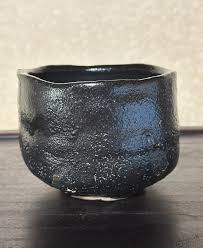
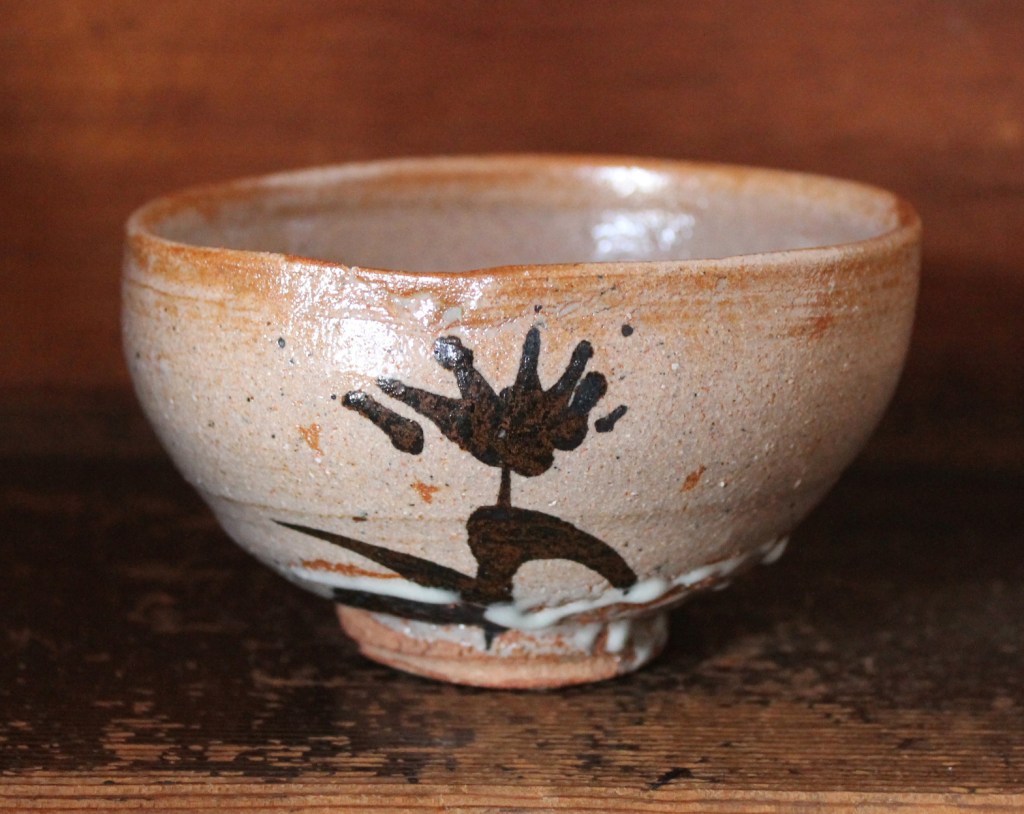
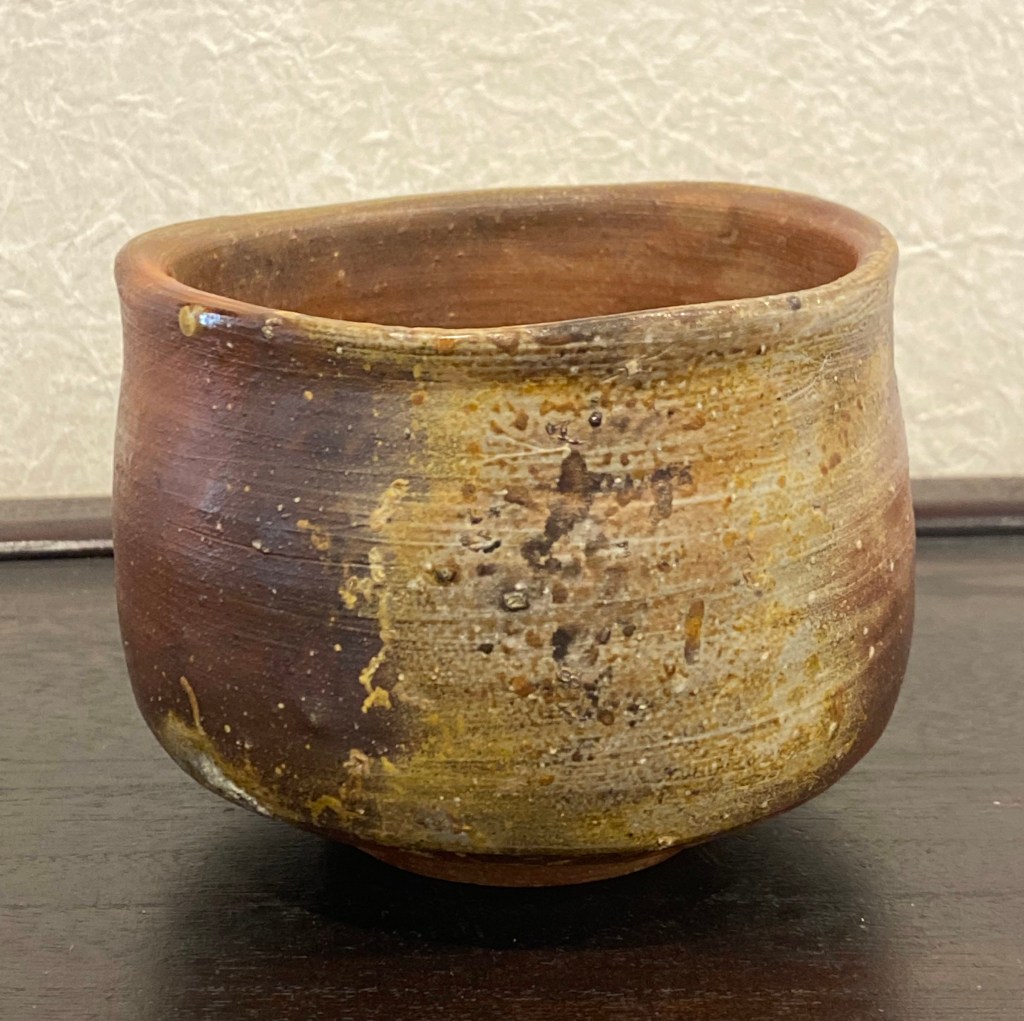
The idea is to practice the hell out of the basics and internalize the wabi-sabi sensibility. Then when you are at the wheel, you let go of deliberate control and let your body and the clay work together intuitively. Shoji Hamada, master potter and Japanese living national treasure, once said that “making pottery should not be like climbing a mountain; it should be more like walking down a hill.”
That’s what I’m after. It may take a while, and I may never get there, or even close. Judge for yourself:
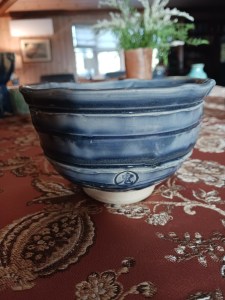
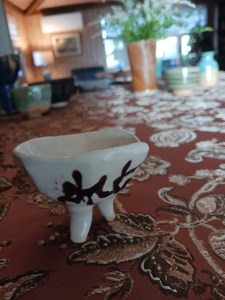

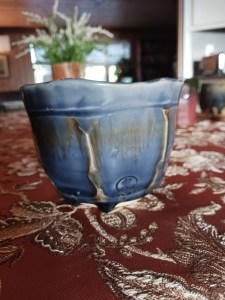
But I’m enjoying the process, and sometimes what they say about the journey being the destination is true. I need to become more technically proficient so I can forget about technique and allow myself to allow my creativity free rein. It reminds me of what one of my professors in psychology grad school told me about doing psychotherapy. He said that I should study hard and learn all I could about theory and research and then forget it all when I went in the room to treat the patient. All that information was in my headbone, but then I could forget it all and trust my instincts. So we are back to jazz.
Man, I’m getting all philosophical and reflective. Next post, maybe I’ll go back to bashing RFK Jr. After all, he richly deserves it. Stay tuned.
Discover more from Samurai Shrink
Subscribe to get the latest posts sent to your email.
 Samurai Shrink