
It’s Saturday here in Rothenberg ob der Tauber. Kay and I are leaving today. How we are going to get a cab out of here is anyone’s guess; the well-preserved medieval streets are tough for cars to get through at the best of times, and now they are filled with pavilions, peasants, knights, and jesters. Kay tells me that it’s only ¾ of a mile to the train station, but I don’t relish the thought of that kind of schlep with our packs and suitcases. Today we are headed to Garmisch-Partenkirchen, a town in the mountains. The place names here are interesting; Rothenberg ob der Tauber means “Red castle above the Tauber (river),” and Gamisch-Partenkirchen is the name of two towns that combined. Garmisch comes from Germaneskau, which AI tells me means “German District,” first mentioned by the Romans in 815 AD, probably referring to a settlement by a Teutonic tribe. I don’t know about anyone else, but AI keeps diverting me down intellectual rabbit holes. Having looked up the meaning of Garmisch-Partenkirchen, I couldn’t help but wonder, who were the Teutons?


It turns out that they were a tribe, probably originating in Scandinavia. When their population increased during the Iron Age, some of them migrated south to what we now call Bavaria. At that point, things take a dark turn, like lots of things in German history, although not always caused by the Germans. In the case of the Teutons, they came into conflict with the Romans. Things didn’t go well for the Teutons when the Romans moved in. They were crushed at the Battle of Aquae Sextiae in 102 BCE. Their king was captured, and the surviving women committed mass infanticide and suicide. At this point it gets confusing, as the Romans called different tribes “Teutons.” Another group destroyed three Roman legions at the Battle of Teutoburg Forest (9 AD), throwing javelins from cover at the Romans for days as the legions slogged through the woods and finally attacking in force with spears, axes, and war hammers. At that point, the Romans decided that Germany north of the Rhine wasn’t worth the trouble and left it alone. Reading all this history reminds me of something a sailor once told me about sailing the ocean: no matter how bad the weather gets out on the sea, it can easily get twice as bad.
The same is true of Rothenberg ob der Tauber. The place is like a fairy tale.


Like a number of EU cities, it’s kind of like a theme park, but that doesn’t detract from its charm. Again, the reason it is so well preserved is not pretty. The town was devastated by the 30 Years War, and then the plague hit, so the place was frozen in time in the 1600s. During WWII, one of the American officials responsible for taking Rothenberg had heard stories about it from his mother, who had visited before the war; he directed the army to take the town without using artillery, which is why I was able to knock back a couple pilsners in the picturesque market square.
Speaking of which, Google Translate has been very helpful, but it is not always accurate. Case in point: I was idly translating the back label of a beer bottle, and this is what Google Translate came up with. Check out the bottom translation:
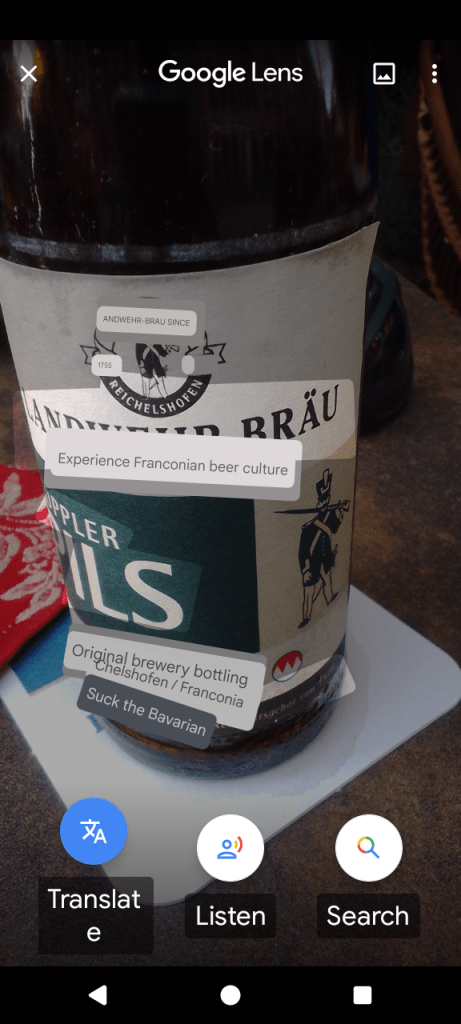
Maybe it’s the custom here? Similar to kissing the Blarney Stone?
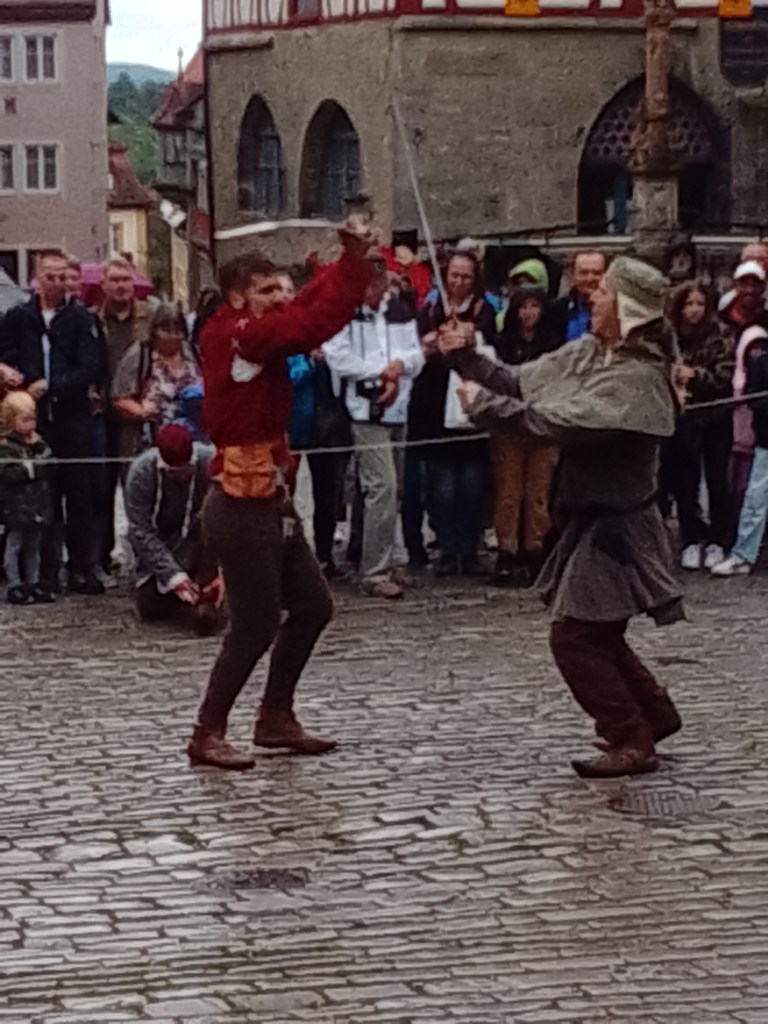
It turns out that we just happened to be in Rothenburg at the beginning of a medieval festival. We didn’t get to see much of it, but we did get a taste:

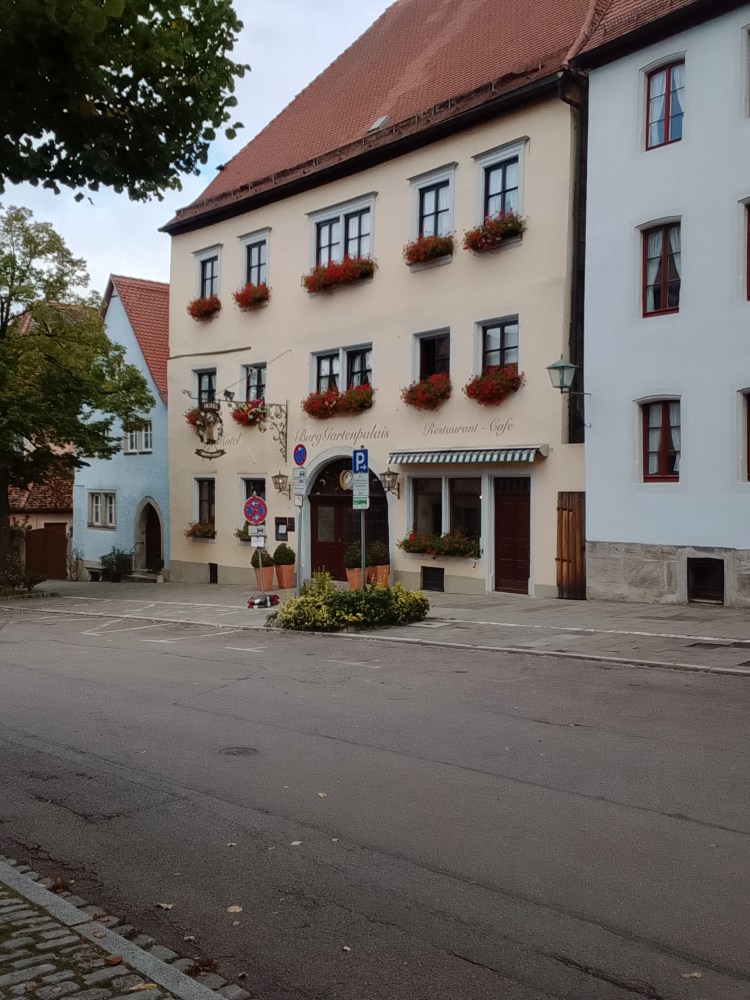
We stayed in a great little hotel right in town, old-fashioned, but exactly what I had in mind.
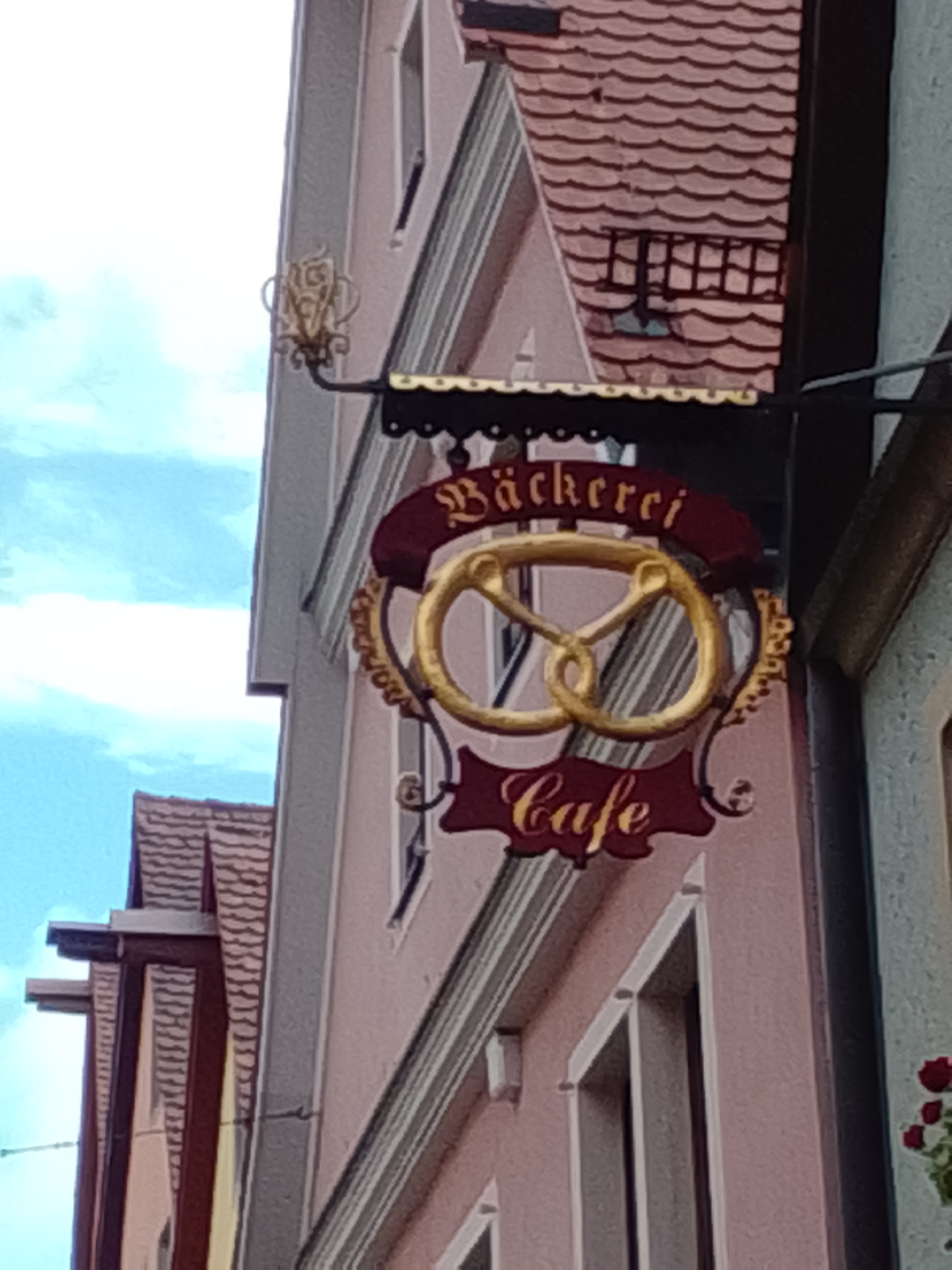
I was particularly struck by the ornate signs we saw all over town:




Today, after enjoying the complimentary breakfast, Kay and I will gather up our possessions and drag them to the station, thence to Garmisch-Partenkirchen. I was practicing my yodeling in the lobby, but the staff begged me to stop. Philistines.
Discover more from Samurai Shrink
Subscribe to get the latest posts sent to your email.
 Samurai Shrink