

I trundled off to graduate school in New York City back in 1978. Things were very different in Manhattan in those days. My first “apartment” was a basement in a townhouse on Carmine Street in the West Village. I’m not talking about a basement apartment; I mean an actual basement. The only piece of furniture was a waterbed; I suspect that someone bought it and filled it up, not realizing it would weigh about 2000 pounds. There was no drain in the floor, so there was no way to empty or move it. For all I know, it may still be there. It was there that I was first introduced to pizza by the slice and the delectable “hippie roll” (sausage, fried peppers, and onions wrapped in pizza dough baked in pizza dough, not to mention the calzone), which I could get from the pizza joint in front of my digs. My friend Tim Speidal once told me that “Pizza by the slice is the thinking man’s health food. You can get it for a buck, and after you eat it, you aren’t hungry anymore.”

I remember that the subway ran right under the place, and if my ear was against the mattress, it was like a sounding chamber. Also, there were no windows at all, so when I turned off the lights, it was pitch dark and I couldn’t see my hand in front of my face; it was like living in a coal mine. I managed to get a job in a group home for intellectually impaired adults near Gramercy Park, where I worked as a counselor and cook. I finally got an apartment in the Cobble Hill section of Brooklyn with one reasonably large bedroom and two other tiny ones. I posted a notice on a bulletin board at NYU for roommates and managed to rent the rooms in short order. One of my roomies was a young woman from Chicago. We hit it off, and now she is my wife of 45 years, but that’s a whole other post. I proposed to her while tending bar at the late, lamented Googie’s bar on Sullivan Street just south of Washington Square Park.

We lived in NYC until 1983 and it was more than enough time. New York City is no place to be poor and our entertainment options were limited. When the weather was decent, we could walk around the Village, Central Park, and Chinatown. But when it was rainy or cold or both, we’d head for one of the dive bars near our apartment in the Village. There was plenty of choice. We could go to the White Horse, the Kettle of Fish, the Lion’s Head and Max’s Kansas City.
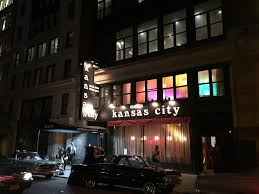
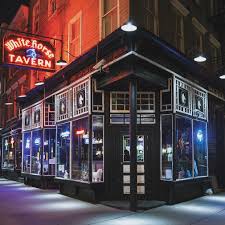
In those days, I could consume a succession of beers, sometimes with a shot of scotch, without waking up with vertigo and a pounding head. The places generally had great jukeboxes and beer nuts, popcorn, and strange pickled eggs floating in jars of some kind of liquid; I never saw anyone eat one.
I’m going somewhere with this. In other posts, I mentioned that I’m now a member of a pottery studio here in Portsmouth, New Hampshire. After a hard evening at the potter’s wheel, a man works up a powerful thirst, yes sirree. There are a number of brewpubs nearby that brew and serve their own IPAs, lagers, and stouts, and they have that neighborhood local feel that I loved when I was in the UK but you hardly ever find these days. They are inviting, friendly, and attract an interesting, diverse crowd. Also, the music isn’t so loud that you have to shout at the person on the next barstool. Sounds perfect until you cash out. Draft beers go from 8 to 10 bucks a pop; you go out with your spouse or buddies and you can easily run up a $100 tab, especially if you each have 3 rounds and maybe buy an $8 pretzel and leave a reasonable tip. The cost seems a bit excessive when you consider that you can score a 12-pack of Carlsberg pints at the local grocery store for $16; that’s about $1.30 per pint. I can’t help but ask, is this just the cost of doing business, or am I being gouged?
I got curious and did some research. I couldn’t help but wonder how my wife and I could go to a dive bar and drink multiple drafts and afford it. So what did a mug of beer cost in 1980 in NYC? I don’t recall (maybe it was all those beers), but AI tells me that you could get a mug of beer for a couple of bucks, tops. Adjusted for inflation, that’s about $7.75 in today’s dollars. I started comparing prices today to prices in 1973, when I graduated high school and in 1980, when I was in graduate school. I had a little trouble wrapping my head around the results, which I will now share with you.
But before I run down the results, a couple of caveats. Wait, as long as I’m digressing, let’s have a sub-digression. I’ve been saying “a couple of caveats” all of my adult life, but what the hell is a caveat? I know intuitively that it means a qualification of a general statement. But I just found out that it literally means “let him beware” from Latin; that’s where we get “caveat emptor” (let the buyer beware) and “cave canum” (beware of dog). But back to the caveats. It is difficult to really compare prices across times. If you were Emperor of Rome in 400 BCE, you might be rich beyond the dreams of avarice. You could drink from a solid gold goblet studded with rubies, have gigantic statues of yourself erected in your honor and have slaves fan you with ostrich plumes while still other slaves massaged your feet or any other part of your anatomy for that matter. But you still couldn’t buy a station wagon or a TV because there weren’t any. Same thing with NYC in the 80s. Even if you had a million dollars in 1983, you couldn’t buy a smartphone or a Game Boy; they weren’t generally available until the late 90s.
These days when I’m out and about, I have a small sling bag for my gear, which includes a 10-inch Chromebook and a small power bank. If you would have told me in 1980 that I’d be carrying around a small computer that pulled information out of the sky and gave me access to libraries of data and virtually every movie ever made, I’d have thought you were reading too much science fiction. I picked it up for about $300; you couldn’t have gotten one for a wheelbarrow full of emeralds in 1980, because they didn’t exist. So how do you compare my standard of living in 1980 to 2025? My sling bag now contains what would have been a priceless artifact in 1972; what’s the value of that? Hey, I’m a psychologist, not an economist; beat the hell out of me. I will pass along the only witticism about economists I know, courtesy of my brother-in-law Larry, an actual economist: “A million economists laid end to end would still not reach a conclusion.”
With that caveat out of the way, back to beer. AI tells me that in 1980, a six-pack of Bud would have cost about $3.50 at the grocery store; that’s about $13 today. Now I can buy the same 6-pack for about $8. It’s hard to believe, but beer is about the same price or a little cheaper today. It’s different if you go out. In 1980, a draft beer at the local pizza joint would have been about $1.50 in NYC ($5.80 today) but probably closer to 75 cents in Cleveland or Omaha ($3.00 today). So beer is cheaper today at Walmart but pricier when you are out for dinner. That’s because the cost of everything in restaurants is more expensive these days. Restaurants are facing higher operating costs. Labor is scarce, real estate in urban areas is increasingly expensive and food costs are way up; both are up by about 30%. For those who support the mass deportation of illegal aliens, keep in mind the principle of unintended consequences. I can tell you from personal experience that if every illegal alien in the US were deported tomorrow, many of your favorite restaurants would close. Would deportation open up job opportunities for American citizens? This calls for another slightly digressive interlude.
I think I have mentioned elsewhere that after my father got out of the meatpacking business, he and my mother opened a restaurant in Cleveland, which was surprisingly successful, considering we had never done it before. I tended bar and worked as a line cook during the summers when I wasn’t at college. One problem we had was that many of the succession of dishwashers we employed had alcohol or drug problems. This was around the time “zero tolerance” policies and drug testing were starting in many industries. My father once told a customer who asked about this that we had our own policy; our kitchen employees were required to be taking drugs “because no one could stand the job otherwise.” He also told me about one of the realities of running a restaurant. As the boss, you could just fire that dishwasher whose eyes were rolling back in his head from whatever he had ingested, but then you’d have to go wash the dishes yourself. I once asked him why we didn’t just pay more and hire a better class of dishwasher. He told me that large restaurant research organizations have studied that very issue. It turned out that it didn’t matter what you paid a diswasher; the job was so unpleasant that if you paid a college student $20 an hour in 1976 money, they would still quit in a matter of weeks. So if you think US citizens will line up to take these jobs vacated by immigrants, think again.
But back to my theme. Restaurants have a low profit margin compared to other businesses, as the helpful chart below will illustrate.
| Industry/Sector | Typical Net Profit Margin |
| Full-service restaurants | 3–6% |
| Quick-service restaurants | 6–10% |
| Banks/Financial Services | 18–28% |
| Software/Technology | Variable, often >10% |
| Healthcare Providers | Variable, often >10% |
| Retail Stores | 2–9% |
| Manufacturing | 3–8% |
| Consulting/Professional | 6–7%+ |
The low profit margin means that restaurants have to pass along price increases immediately; the recent disruptions to the supply chain have caused sharp increases in basic food costs, and that gets multiplied for full-service restaurants. This is a disturbing trend that could lead to a death spiral: higher restaurant prices lead to less consumer spending (staying home to drink beer), which leads to higher prices. Around and around we go. Throw in the impact of global warming on barley production (spoiler alert: the real cost of beer could increase by 40% by 2050) and things start to look pretty grim. That doesn’t even take into account the impact of global warming and its effect on hops; the EU produces 90% of the world’s supply and production is already declining and the quality is being degraded. So the outlook on hops is pretty dismal even before you impose an exorbitant tariff. Some economists have pointed to beer as a “canary in a coal mine” for global warming-related economic disruption. So, for those members of my vast readership who are climate change skeptics, you don’t have to take my word for it or the words of those fake experts at the universities; just keep your eye on the price of beer.
So $10 for a brew at the local brewpub isn’t exorbitant, but it is on the high side. But I am getting a small-batch craft beer, and that’s worth something. Also, nobody made me live in Portsmouth, New Hampshire. Portsmouth is a little jewel on the coast of the North Atlantic. Expensive beer is part of the cost of living in a place where some evenings the mist rolls in off the ocean through the trees of the Urban Forestry Center just down from my home. Actually, forget that last part. Portsmouth is an awful place and you really don’t want to live here; please stay in Cleveland, where prices are low and the sun shines all the time.
You know, this blogging gives a man a powerful thirst. Maybe a couple of cold ones down at the local would be just the thing, at least while I can still afford them.
Discover more from Samurai Shrink
Subscribe to get the latest posts sent to your email.
 Samurai Shrink