
Lately, I’ve been thinking about pottery. I should probably back up and provide some context. When I was around 13 or so, I somehow got it in my mind to make sculptures. Maybe I tried it in art class, but I don’t recall. But I managed to obtain some self-hardening clay and made some animal figurines and painted them. I’m not proud, but I recall making a little pig; I suspect Michelangelo didn’t get his start that way, but in my defense, I didn’t have a great deal of guidance. Later, when I trundled off to New College in Sarasota, I started taking pottery classes for credit. I discovered I really enjoyed it. I used to work in what we called the art barracks for hours and my second year there, I snagged the position of pottery foreman. This had a number of benefits; I received a small stipend that I mostly spent on beer and I was free to experiment. I built a small kiln out of local clay and fired my pots with palm fronds and driftwood. I helped build a gas-fired kiln and learned to fire stoneware; I also had a mishap and blew it up, but to my everlasting shame I slunk away and didn’t fess up; I did fix it later. Another perk was unexpected; suddenly girls who paid little attention to me found me more interesting as the foreman, but I’m too much of a gentleman to go into that. At one point I floated the idea of a career as an artist to my family, only slightly serious. I was majoring in psychology at the time, and I will never forget the slightly panicked way my mother suggested, “Well, maybe you could be a potter and a psychologist!”
Bear with me; I’m going somewhere with this. Recently, I joined a local pottery studio. It had been almost 50 years. I tried a few pinch pots and was pleased to discover that I could still do it. Not great art, but they were pots. I got up my nerve and tried the potter’s wheel and was astonished to find that I could still throw a cylinder. They weren’t masterpieces, but to paraphrase Samuel Johnson, it was not done well but I was surprised to see it done at all. I started glazing them and bringing home my creations. My wife and kids praised my work, but I couldn’t help but cast my mind back to elementary school; I’d bring back what looked like a poorly made dog dish and my mother would kvell over it. It took years for me to realize that she really wasn’t that impressed with my artistic ability. In any case, I started to get the hang of things and actually managed to produce a few pieces that I liked. Here’s to further progress.
If you’ve followed my blog, you know that I have always had a thing for Japanese art, particularly their ceramics. I think the quintessential form of Japanese ceramics is the chawan, or tea ceremony bowl.
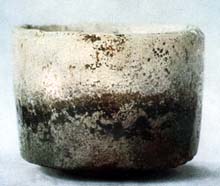
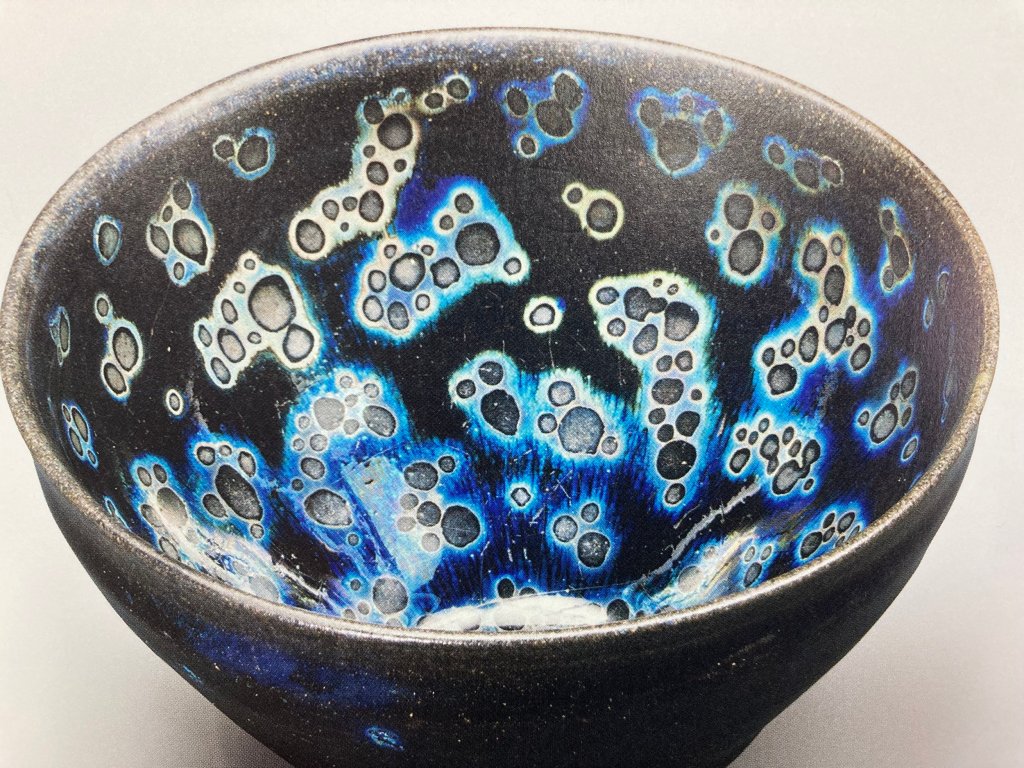
Here are a few examples of famous tea bowls; some are considered “Important Cultural Properties,” which are just one stop down from National Treasures. In case you are interested, here are some examples of Japanese National Treasures:
While I was at New College, I discovered the work of Hamada Shoji, who at the time was one of the Living National Treasures of Japan. The Japanese Ministry of Education, Culture, Sports, Science, and Technology designates certain individuals as Living Treasures in a number of areas, including pottery, textiles, lacquerware, metalworking, dollmaking, woodworking, and papermaking. Wikipedia tells me that there are 111 of these folks still alive and kicking; they receive an annual stipend of about $14,000 per year. I was incredibly impressed by Hamada-san’s work and wanted to make pottery just like his.
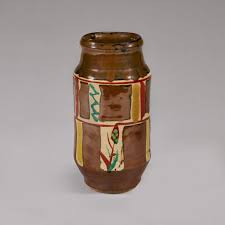
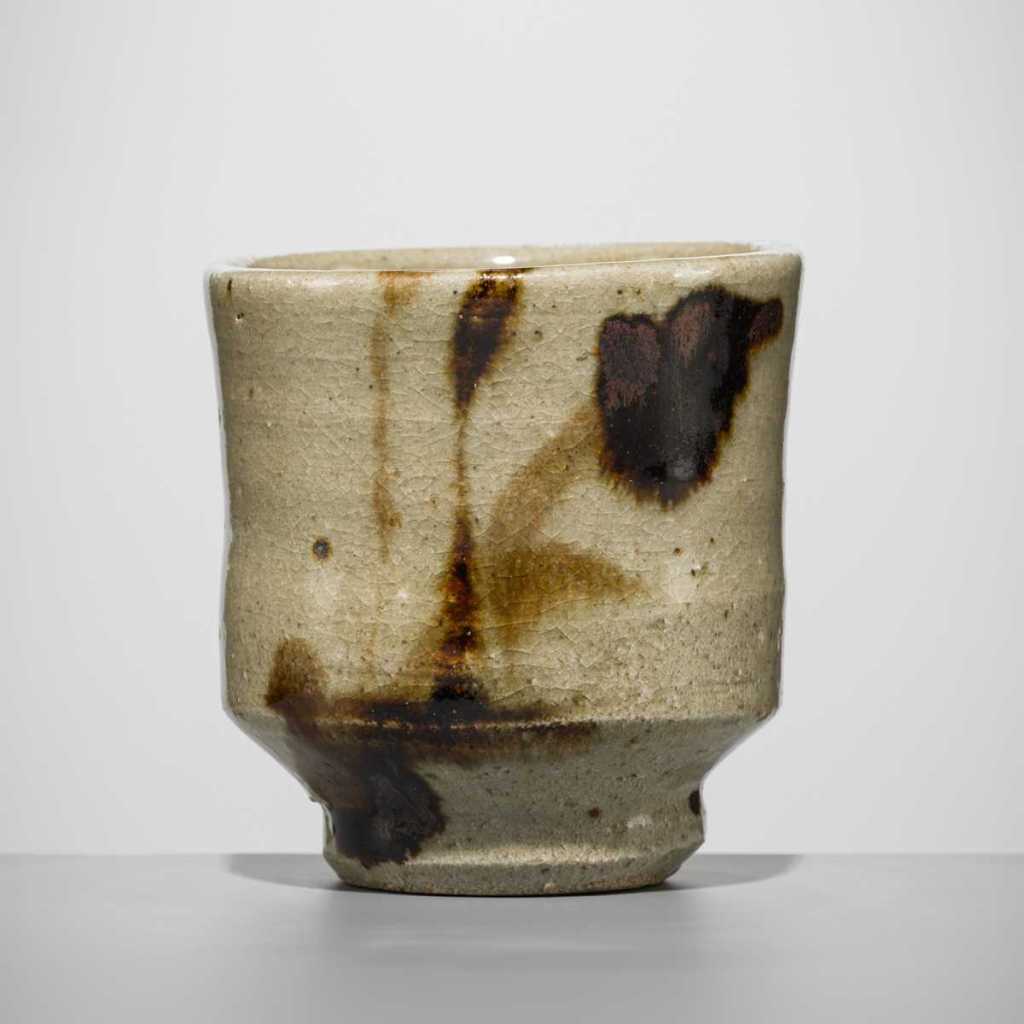
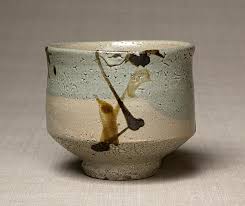
Of course, I can’t and probably never will. I know who I’m up against. Maybe if I had devoted my life, starting at about 12, to pottery and had some talent, I might have gotten there, or at least in hailing distance, but there’s no guarantee. By way of analogy, I’m an amateur magician. It takes some practice to do sleight of hand, but if you get a book or tape and practice basic techniques for a few weeks, I promise you will be able to do some tricks in a way that will not bring disgrace on your ancestors. The linking rings, cups and balls, and sponge balls? You could do it if you put your mind to it and practiced about 20 minutes a day.
It’s funny, but there is often a disconnect between who laypeople think are experts and who those with a little more knowledge think are tops. For example, can you name a notable modern psychologist? Hint: Dr. Phil isn’t one of them. And if you mentioned Jordan Peterson, I just feel sad. But if you asked one of my colleagues, they might mention Paul Meehl, Cecil Reynolds, or Stephen Ceci. It’s the same with magic and sleight of hand. Most people would mention David Copperfield, David Blaine, or Cris Angel. Ask a magician, and you’d get different answers. Some might mention Slydini or Greg Wilson, but most would mention Dai Vernon, also known as “The Professor.”
It looks effortless, doesn’t it? Trust me, it isn’t; Vernon practiced relentlessly to get to that level of skill. But here’s the thing: I could practice just as hard, but I wouldn’t be as good as the professor. He had what my father called “the full package.” Vernon had natural talent; he practiced day and night and he was great at presenting. Even if I practiced day and night, I don’t have the natural talent, so I don’t have the full package, magic-wise. So it is with me and pottery; if I had stayed at it during the intervening 50 years, I might have gotten good at throwing on the wheel or handbuilding. It’s not clear whether I had any special talent, but honestly, most people can’t tell really good pottery from OK pottery. I’m back in the studio now and I’m surprised that I can still throw a cylinder and make a mug. But I still want to create pieces like Hamada. My pieces are getting better, but I have a long way to go. Judge for yourself:
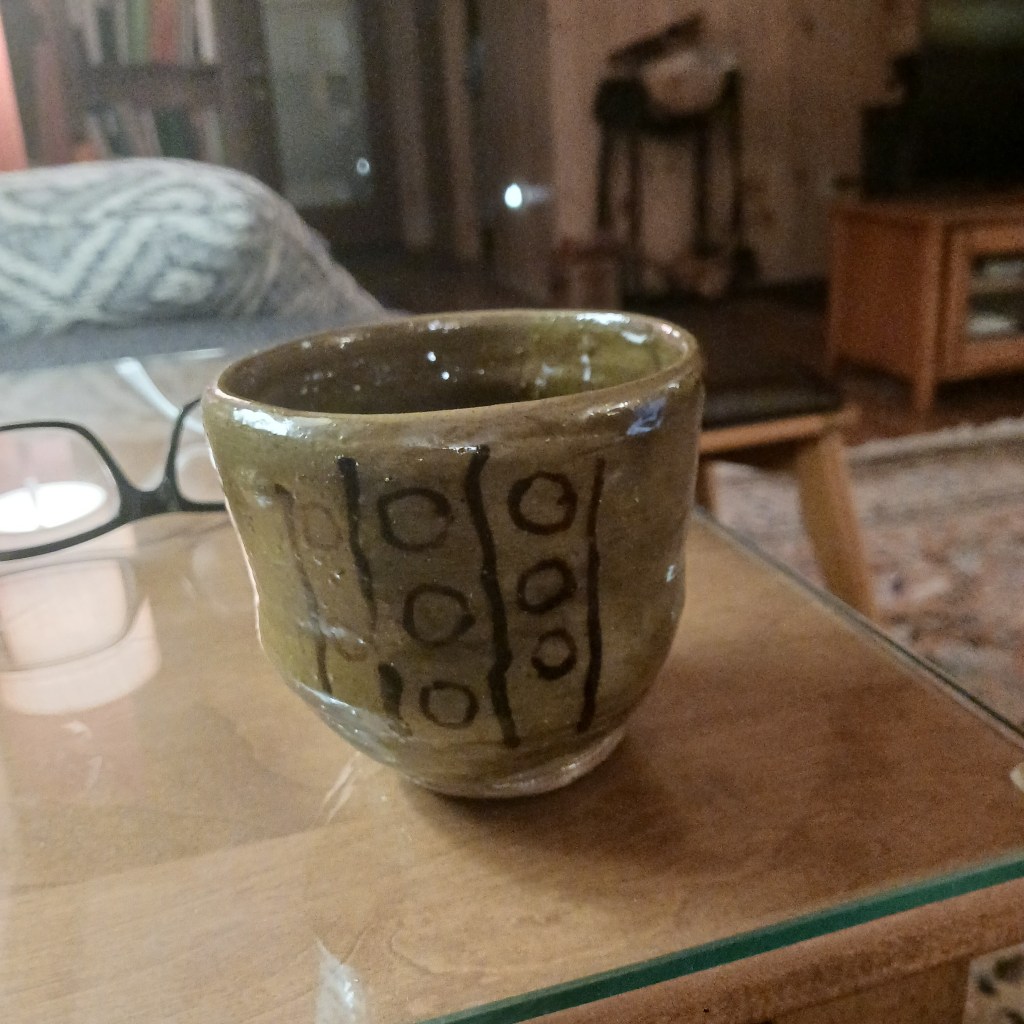
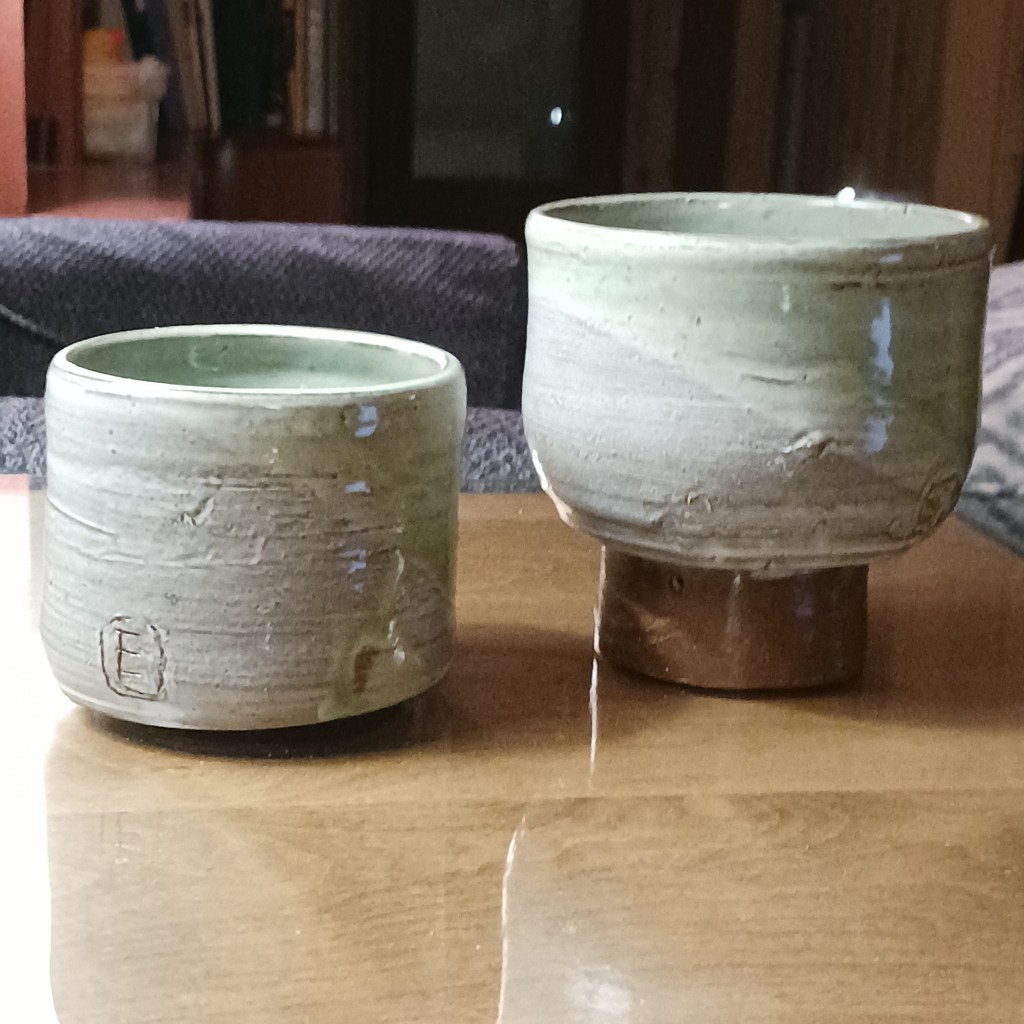
Maybe you like this kind of thing, maybe not; it’s not everyone’s cup of tea. See what I did there? But I have been reading about Japanese aesthetics for years and they have a concept sometimes referred to as wabi-sabi. I’m not sure how well the concepts translate , but my understanding is that wabi refers to beauty that comes from natural, unpretentious materials and simplicity that mirrors what is found in nature. Sabi refers to the beauty that comes from long use; think about the rolling pin that your grandmother brought over from the old country and used for 50 years. These concepts can be seen in classic Japanese ceramics; here are some examples:

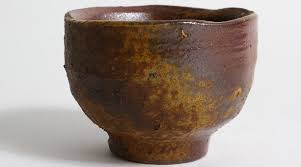
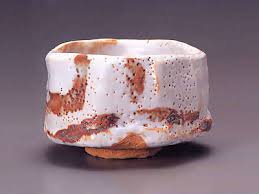
The tray to the left is an example of oribe ware; the middle bowl is from the kilns of Bizen and the one on the right is shino ware. See the wabi/sabi? The oribe tray seems to have simply been dipped casually in the green glaze, and the lines of the geometric design aren’t even straight. The middle bowl is a subdued collection of earth tones and the lip of the bowl is a bit wavy. The right bowl has pits in the glaze and it looks like it was just casually brushed with some oxide to make the simple decoration. How hard could it be?
It turns out that it is very hard indeed. I’ve certainly tried, but just randomly forming an off-center tea bowl with a few random brush strokes just doesn’t cut it. Why is that? I think I started to figure it out in Japan, which, when you think about it, would seem the best place to do that. I started to get a clue in some of the izakaya and standing bars I visited. One in particular stands out, Sake Bar Doron in Shinjuku, Tokyo.
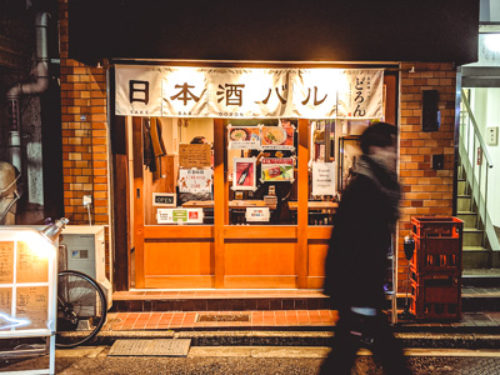
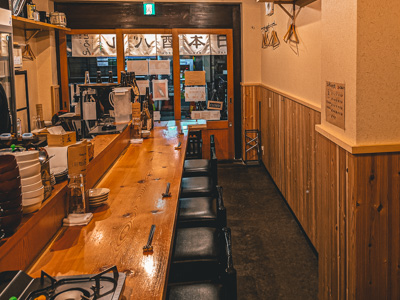
I wandered into the place while I was looking for something else and started feeling a bit peckish. It looked like many other little places I’d passed walking around the area but it looked inviting and I went in and got a seat at the bar. The place is great, with a seemingly endless selection of sake and pretty much any other beverage you might desire. And they have a great menu of what we’d call small plates; everything I tried was delicious and beautifully presented. It’s not what you’d call high-end; almost everything on the menu can be had for $5-$10 US. If they opened it in Portsmouth, there would be a line around the block, and they would have to fight off customers with a stick. I was there a while and I took the time to really look at the place. It looks relaxed and casual, and it is, but I began to notice that everything was exactly as it should be. They didn’t just slap a few posters on the wall and tack up the menu; if you looked carefully, you could see that the place was, in its own way, as carefully planned out as a formal Japanese garden or shrine, without being mannered or stilted. It got me to thinking about Japanese design and aesthetics. I know that there are people who have spent their careers thinking about such things, but here’s my take.
It seems to me that there is a tension between the wabi-sabi thing and its execution. On the one hand, the Japanese value things that look natural and have minor imperfections that give an object individuality. On the other hand, they aren’t a bunch of rubes; they know an amateurish painting or platter when they see one. The idea, as far as I can see, is a kind of controlled spontaneity that grows out of mastery. Here’s an example:
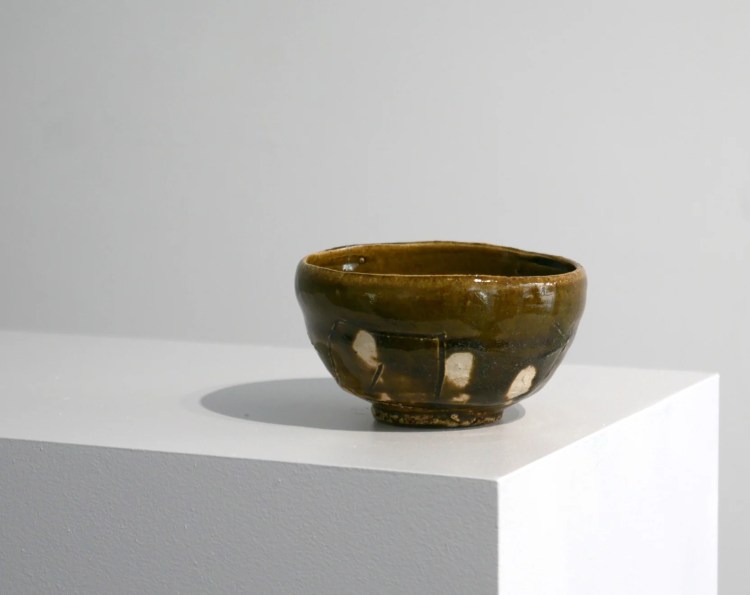
This tea bowl has an earthy greenish-brown glaze over a light clay body; it looks like something that you might find growing on a mossy fallen tree in a forest. But notice the white spots; how did they get there, and why? Here’s how that happens. When you throw a bowl on the potter’s wheel, you let it dry. At that point, the dried, unfired clay is called greenware. Then you fire it for the first time in a kiln at a relatively low temperature, about 1650 to 1950 degrees. This is called bisque firing and turns the raw clay into something like a flowerpot. This is important because if you get a piece of greenware wet or dip it in a bucket of glaze, it will just dissolve. Once it’s bisque fired, you can draw on it with special paints or just dip it into a bucket of glaze. Glaze is made of silica, which fuses into glass and makes the piece waterproof. But you couldn’t just coat a pot with powdered sand, because it wouldn’t fuse until it reached about 3015 degrees and that would take a great deal of fuel and a long time. So glazes include some kind of flux, usually powdered feldspar, to lower the melting temperature. Alumina is also added to stiffen the molten glaze so it doesn’t run off the piece like hot fudge off a sundae, as well as coloring agents.
You generally glaze a piece of pottery by dipping it into a bucket of liquid glaze using special pointy tongs so it covers the whole piece smoothly. But that’s not what the artist who made the bowl in the picture did. Those white spots are bare patches left by their fingertips; they grabbed the bottom of the bowl in their hand and dunked it into the bucket. You can see how this was done by the spacing of the patches. And they didn’t brush on a little more glaze to cover those patches; they just left the piece like that. Some folks might see this as a flaw, but I think it adds something. It reminds you that the piece was made by a real person and the lighter spots provide a pleasing contrast to the earthy glaze. I could go on, but you get the point.
The idea, as I understand it, is to cultivate a spontaneity that grows out of long mastery of fundamental techniques and a great deal of practice. Maybe controlled spontaneity describes it? It sounds like a paradox but the best Japanese artists make it work.
So, back in the studio, trying to create my own wabi-sabi pottery. I’ve got my work cut out for me. For one thing, my basic skills are better than I expected, but I have a long way to go, particularly on the potter’s wheel. The glazes are new, so I don’t know how my pieces will come out of the kiln. Assuming I get that down, I’ll have to get my Zen mojo working, assuming I have any mojo. It’s like a Zen koan: what is the sound of one hand clapping? Beats the hell out of me.
Discover more from Samurai Shrink
Subscribe to get the latest posts sent to your email.
 Samurai Shrink