Between 1978 and 1983, I lived in New York City while I was going to graduate school. It was quite an adjustment given that I had spent 1974-1976 at what was then New College in Sarasota, Florida. I had spent my first year of college at Ohio State University, pretty much because I had to. I had decent grades in most subjects, but I managed to flunk Spanish I, pass it the next time around, and then flunk Spanish II; that will pull the old GPA down, yes, sirree. Also, I had an aversion to homework. I felt that if I was aceing all the tests and quizzes, there was no point in homework; how much better could I have done? As for the courses that were harder for me, who needed them anyway? The joke was on me; I may have been the only National Merit Commended Student (didn’t make the cut for a scholarship) in history with a 2.4 GPA.
The upshot was that I went to Ohio State because they pretty much had to take me. I hasten to add that after the 70’s, OSU became much more selective. I got the message, worked a little harder, got my freshman GPA up to 3.8, and transferred out just as fast as I could. The school was just too big; I read that if Ohio State had been in Wyoming at that time, it would have been the biggest city in the state. I just checked on Perplexity AI, and it turns out that in 1973, Cheyenne, Wyoming, had a population of 43,000, while OSU had 52,000 students. On the positive side, I did make the varsity fencing team. This led to a running joke in my family. My father was one of those guys who was the athlete of his generation in Northeast Ohio. He lettered in football, basketball, track, and tennis and set a number of state records; back in his high school days, he could run the 100-yard dash in 10 seconds flat and could stand under the basketball hoop, jump up, and hang from it. But only one of us was ever on the varsity at a Big 10 school. I used to leave out the fact that everyone who tried out for the team made it, but it still goes in the win column.

I applied to a bunch of schools and got into a few, including Northwestern. Then my friend Alan Kraus suggested I take a look at New College, a tiny liberal arts college in Sarasota with about 400 students.
I flew down and interviewed; that evening I called my parents and told them I was headed south. Why the snap decision? In retrospect, it might have been the coed clothing optional pool, but that’s a story for another time. In any case, I opted for the accelerated 2-year program and graduated in 1976 at the age of 20; after a few false starts, I ended up in the school psychology doctoral program at Frekauf Graduate School of Psychology; at the time, the program was housed on 5th Avenue and 13th Street in Manhattan in the same building as Wurtzweiller School of Social Work and Cardoza Law School. I got a part-time job at Googie’s Bar on Sullivan Street alas, gone the way of almost every other decent dive bar in NYC. I worked the swing shift, which in NYC in those days was 6 PM to 2 AM and that’s where I proposed to my wife Kay back in 1981. Then it was just a question of grinding it out till they saw fit to give me my doctorate.

Around this time, my friend Tim Speidal (another New College student) was in the film program at NYU. Tim recommended that I go out and pick up a copy of a book called The Shadow of the Torturer by Gene Wolfe. A bit of explanation: The Book of the New Sun was originally four books. The first was The Shadow of the Torturer, followed by The Claw of the Conciliator, The Sword of the Lictor, and The Citadel of the Autarch. I’ve gone back to these books many times over the years.
The story is set so far in the future that the denizens of Urth don’t even recall our civilization, and the sun is beginning to dim. Severian is raised by the journeymen of the torturer’s guild, officially called the Seekers of Truth and Penance. The torturers raise the children of the women that die “under their care” as apprentices of the guild. In this future world, they no longer incarcerate criminals or enemies of the state for extended periods of time; that takes too many resources. Instead, they inflict tortures ranging from simple public floggings to much worse punishments. They take pride in their work and never mete out any more torture than has been prescribed by the magistrates. The story opens with the protagonist, Severian, finishing his last year as an apprentice before he is elevated to journeyman.
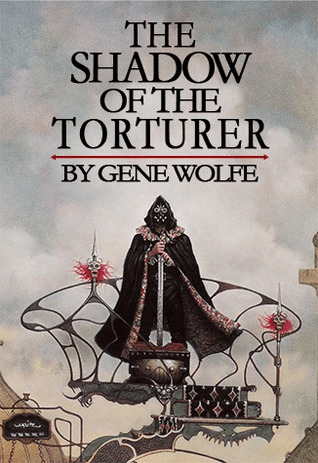
Severian’s call to adventure begins when he befriends one of the prisoners in the torturer’s tower, a noblewoman named Thecla; their relationship grows closer until they become lovers. Then Severian commits the worst sin imaginable for a torturer, showing mercy to a client, which is what his guild calls their victims. He is sent away from his guild headquarters to work his trade in the provinces. Before he leaves, his old master gives him a priceless headman’s sword called Terminus Est. I was struck by the exchange between Severian and his master when he presented this gift:
“I am deserving of no gifts.”
“That is so. But you must recall, Severian, that when a gift is deserved, it is not a gift but payment.”
Severian leaves the guild and begins a picaresque journey across Urth; he works as an itinerant torturer/executioner, becomes a soldier in the irregular cavalry, fights a duel with poison alien plants, and becomes involved in the intrigues between the Autarch, the absolute ruler of his land, and the rebel insurgency led by the mysterious Vodolus. The prose is beautiful, reminiscent of Conrad and Melville at their best. But the books are not easy going; for one thing, Wolfe uses archaic terms to describe the people and things encountered by Severian. His torturer’s cloak is not black but fuligin, so black that it shows no folds. A ship’s captain wields a craquemarte, an old medieval name for a heavy sword, and the social order consists of Exaultants (nobility), Amigers (knights), and Optimates (wealthy merchants). The characters do not fight duels; they engage in momomachy, and when Severian plys his trade, he is a canifex. I spent a long time trying to track the meaning of these words down, but they do add atmosphere to the story.
While these books were very well reviewed, they were also ghettoized as science fiction; they are so much better than that. Personally, I think they rank as some of the best fiction of the 20th century.
And I’m not alone; here’s a quote from Michael Swanwick:
Gene Wolfe is the greatest living writer in the English language alive today. Let me repeat that: Gene Wolfe is the greatest writer in the English language alive today! I mean it. Shakespeare was a better stylist, Melville was more important to American letters and Charles Dickens had a defter hand at creating characters. But among living writers, there is nobody who can even approach Gene Wolfe for brilliance of prose, clarity of thought and depth in meaning.”
And Michael Swanwick wasn’t just whistling Dixie; the book is filled with lines I’ve never forgotten. A couple examples, including the first two lines which I think are right up there with “Call me Ishmael,” “Whether I shall turn out to be the hero of my own life, whether that station will be held by anyone else, these pages must show.” and “If I am out of my mind, it’s all right with me, thought Moses Herzog,” are:
“It is possible I already had some pretty sentiment of my future. The locked and rusted gate that stood before us, with wisps of river fog threading its spikes like the mountain paths, remains in my mind now as the symbol of my exile.”
There are plenty of others. Severian has an encounter with a man from the future; he is green because they have learned to incorporate genetically altered algae into their bodies and can now live on sunlight alone. The green man is a captive in a freak show when Severian speaks with him and his captor doesn’t want paying customers to gape at him for too long.
“I drive away those who pay to see me by foretelling their futures, and I will foretell yours. You are young now, and strong. But before this world has wound itself 10 times more about the sun you shall be less strong, and you shall never regain the strength that is yours now. If you breed sons, you will engender enemies against yourself. If-“
“Enough!” I said. “What you are telling me is only the fortune of all men.”
And it only gets better from there. Early on in the story, Severian saves Vodalus, the leader of the insurgency in a necropolis. Severian impulsively pledges himself to the rebel leader, telling him, “I am a Vodalarius. One of the thousands of Vodalarii of whose existence you are unaware.” Vodalus rewards him with a coin and disappears into the night. Looking at the coin, Severian muses;
We believe that we invent symbols. The truth is that they invent us; we are their creatures, shaped by their hard, defining edges. When soldiers take their oath they are given a coin, an asimi stamped with the profile of the Autarch. Their acceptance of that coin is their acceptance of the special duties and burdens of military life—they are soldiers from that moment, though they may know nothing of the management of arms. I did not know that then, but it is a profound mistake to believe that we must know of such things to be influenced by them, and in fact to believe so is to believe in the most debased and superstitious kind of magic. The would-be sorcerer alone has faith in the efficacy of pure knowledge; rational people know that things act of themselves or not at all.
In another part of the story, Severian, serving with a troop of irregular cavalry and going into battle, feels intense fear for the first time in his life. He manages his terror, then muses;
There is no other difference between those who are called courageous and those who are branded craven than that the second are fearful before the danger and the first after.
Later, Severian and his cavalry troop ride into another battle, accompanied by mounted barbarians. They are met with blasts from terrible energy weapons. Severian watches as these allies are blown to pieces or vaporized and notes that they chant and pray as they advance:
Each rider seemed to have a personal spell; and it was easy to see, as I watched their numbers shrink under the bombardment, how such primitive minds come to believe in their charms, for the survivors could not but feel their thaumaturgy had saved them, and the rest could not complain of the failure of theirs.
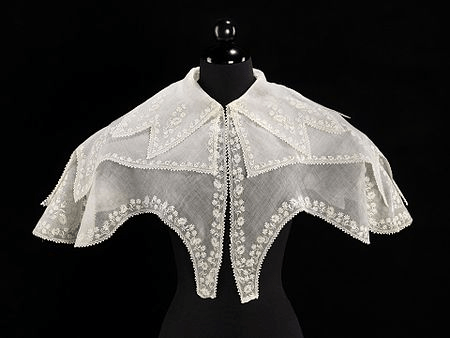
The writing throughout the book is astonishing, but there are provocative ideas as well. Early in the book, Severian comes into possession of a holy relic, a large gem called the Claw of the Conciliator. The gem has a flaw in its center that looks like the talon of a raptor; there is ambiguity about whether the Conciliator is a man, a hawk, or both There seems to be a religious belief held by Severian and others of a Christ-like figure who will bring conciliation between God and his creation and also herald the coming of a new sun to replace or renew the feeble, dying sun that lights Urth in Severian’s time. The Conciliater was sometimes represented as an eagle, partly explaining why the gem is called the Claw. The gem may or may not have the power to bring people back to life. At one point in the story, the gem is shattered, but Severian finds the embedded claw, which he preserves in a pouch around his neck until he can return it to its rightful custodians, the Pelerines, who are a religious order of women who care for sick and wounded soldiers. Another obscure word, pelerine, is a short cape covering only the shoulders. The members of the order wear scarlet pelerines as a symbol of their faith, which makes them simultaneously sisters of mercy and scarlet women.
He manages to return the Claw to them, but later, while walking back to the capital city of Nessus, he brushes against a wild rose bush, and a thorn embeds itself in his forearm. Severian plucks it out and sees that it looks exactly like the Claw he had returned and drops to his knees in awe.
What struck me on the beach—and it struck me indeed, so that I staggered as at a blow—was that if the Eternal Principle had rested in the curved thorn I had carried around my neck across so many leagues and now rested in the new thorn (perhaps the same thorn) I had only now put there, it might rest in anything, and in fact probably did rest in everything, in every thorn on every bush, in every drop of water in the sea. The thorn was a sacred Claw because all thorns were sacred Claws; the sand in my boots was sacred sand because it came from a beach of sacred sand. The cenobites treasured up the relics of the sannyasasins because the sannyasins had approached the Pancreator. But everything had approached and even touched the Pancreator, because everything had dropped from his hand. Everything was a relic. All the world was a relic. I drew off my boots, that had traveled with me so far, and threw them into the waves that I might not walk shod on holy ground.
There are other passages that present other interesting but less mystical perspectives. At one point, Severian attempts to explain why The Seekers of Truth and Penence are essential to the functioning of his civilization. As a forensic psychologist, I am struck by the argument Severian makes for the necessity of torturers. I don’t agree, but the idea of a justice system based on ideas of retribution different from ours is fascinating.
· Serverian acknowledges that what The Seekers of Truth and Penance do is torture and causes pain
· But he points out that they take no pleasure in their work and never inflict more than the prescribed amount of suffering
· Some people say that what they do is worse than what the criminals did and that they should not work at their trade
· But if there was no one to punish the wicked and deter crime, no one would be safe; people would take matters into their own hands, and everything would be much worse
· Other people point out that some of the criminals are being punished too harshly and others not harshly enough. But they are just setting themselves up as inexperienced judges who would do an even worse and more arbitrary job
· Another group feels that the criminals should not be tortured at all but made to work on public projects
· But this would take jobs from law-abiding citizens, which is unfair. Also, as conscripted workers, these criminals would need to be lashed, which is just more torture
· Yet another group feels that the criminals should be incarcerated but treated humanely
· But that costs money that could be much better spent on the soldiers who are defending the Commonwealth and they are more deserving; also, people who live in comfort without pain live a long time
Let me go on record as opposing torturing anyone. But the argument does give me pause to wonder about our own correctional system (something I do often, working in the courts).
One caveat about the books. There are long passages with obscure meanings that either don’t fit in with the narrative, or it may be that I just don’t understand them. My suggestion is that if you read The Book of the New Sun, don’t worry about skipping ahead. Its like reading Moby Dick with its long passages on whaling; if you like that kind of thing, have at it, but if you have read enough about whale anatomy or the scientific classification of the various types of whales, I think you can move along without missing too much. Same with The Book of the New Sun.
One quibble I have about Wolfe as an author is that he is one of those who felt that his readers should be willing to work at understanding his writing for as long as it takes, similar to James Joyce. Joyce once said that it took him 17 years to write Finnegan’s Wake and that readers should be willing to take just as long to figure it out. I tried reading Finnegan’s Wake once and came across passages such as:
“Bababadalgharaghtakamminarronnkonnbronntonnerronntuonnthunntrovarrhounawnskawntoohoohoordenenthurnuk!”
Perplexity AI informs me that “This 100-letter word is considered to represent the symbolic thunderclap associated with the fall of Adam and Eve. It’s a prime example of Joyce’s linguistic experimentation and the novel’s overall obscurity.” I’ll have to take the AI’s word on that. Another example is:
“And as I was jogging along in a dream as dozing I was dawdling, arrah, methought broadtone was heard and the creepers and the gliders and flivvers of the earth breath and the dancetongues of the woodfires and the hummers in their ground all vociferated echoating: Shaun! Shaun! Post the post! with a high voice and O, the higher on high the deeper and low, I heard him so!”
I’m informed that this is profound in that its ambiguity provides room for multiple interpretations, offers insight into stream of consciousness thinking, and has mythical and dreamlike elements. Maybe, but the book is close to 700 pages of that kind of thing, and I have enough pain in my life without spending the next 17 years slogging through that kind of prose. I suspect that Joyce could have just written whatever he had on his mind without putting his readers through all of that, and who knows if the insights (if there are any) are worth that much effort. Gene Wolfe is never that obscure, but there are parts of the book that I never made it through even after several readings. Of course, I’m one of those folks who wonders if Jackson Pollock was just dribbling paint; you be the judge.

As an experiment, I had Perplexity AI create a brief passage in the style of Finnegan’s Wake. See if you can tell which is by Joyce and which is nonsense created by the computer:
Passage 1
“Soft morning, city! Lsp! I am leafy speafing. Lpf! Folty and folty all the nights have fallen on to long my hair. Not a sound, falling. Lispn! No wind no word. Only a leaf, just a leaf and then leaves. The woods are fond always. As were we their babes in. And robins in crews so. It is for me goolden wending. Unless? Away! Rise up, man of the hooths, you have slept so long! Or is it only so mesleems? On your pondered palm. Reclined from cape to pede. With pipe on bowl. Terce for a fiddler, sixt for makmerriers, none for a Cole. Rise up now and aruse! Norvena’s over. I am leafy, your goolden, so you called me, may me life, yea your goolden, silve me solve, exsogerraider! You did so drool. I was so sharm. But there’s a great poet in you too.”
Passage 2
“Glimmering dancetongues soughed through the labyrinthine gloaming, whimsical flivvers echoating in murmurous quicksilver! Arrah, methought the thunderous kaleidoscope babbled, intertwining serpentine creepers with ephemeral broadtone. Vociferated whirlwinds of sibilant mythos, transcendental and nocturnal, chronicled the dreamscape’s hummock gliders in a whirlwind of intertwined nonsense!”
Give up? Passage 1 is Joyce; Passage 2 is computer-generated nonsense.
I’m reminded of what my supervisor at my first job as a school psychologist for the NYC school once told me: If you take a book and you hit it against your head and hear a hollow sound, its not necessarily your head. But back to The Book of the New Sun.
I think I return to The Book of the New Sun for many reasons. On one level, it is an adventure story, complete with a wandering anti-hero, space aliens, battles, and everything you could want in a bildungsroman. But it also has thoughtful meditations on the human condition, the nature of time and space, good and evil, and justice, all presented by a writer who combines the best qualities of Conrad, Melville, Zelazny, and Chandler. The first time you pick it up (assuming you like this kind of book, and not everyone will), you will probably read straight through to find out what happens to Severian and his companions. But if it grabs your imagination as it did mine, you will pick it up again and again, re-reading particularly affecting passages, puzzling out some of the more obscure sections, and finding layers of meaning you didn’t catch the first or second time through. Its not for everyone; every Wolfe alludes to this in the lines that end the first three volumes in some of the most affecting words I ever read:
Here I pause. If you wish to walk no farther, reader, I do not blame you. It is no easy road.
Maybe the road isn’t easy, but its well worth the trip.
Discover more from Samurai Shrink
Subscribe to get the latest posts sent to your email.
 Samurai Shrink